How Many Americans are Fascists?

Fascists marching in Charlottesville, in 2017.

It is not easy to determine how many fascists there are in the United States. I think itโ€™s fully clear that, by a considerable majority, Americans largely reject fascism, in part because they support the rule of law, multiparty electoral systems, and the basic rights and liberties ostensibly protected by the US Constitution, like freedom of association and freedom of assembly. It is possible, and actually quite common (as we see from Trumpโ€™s 2024 electoral victory), for people to be conservative nationalists, holding various racist, sexist, homophobic, transphobic, and anti-union views, while nevertheless also being non-fascist. The number of fascists will surely be well below the number of 2024 Trump voters, which is just over 77 million.

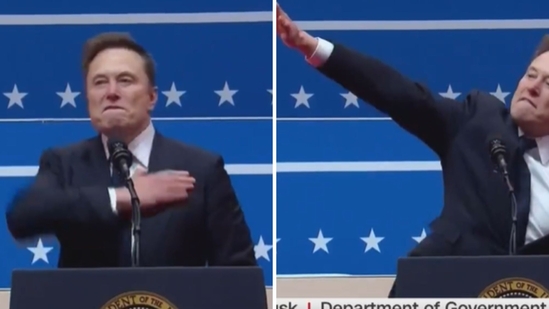
Even so, however, the number of fascists in the United States is obviously nowhere near zero. There are dozens of substantial organizations that are more or less openly fascist, including the Oath Keepers, the Proud Boys, the Patriot Front, the JDL, and the Three Percenters, to name only a few. Moreover, the โ€œYarviniteโ€ version of fascism โ€” which fuses โ€œAlt-Rightโ€ culture-war agitation, neo-Nazi historical symbolism (like the notorious โ€œHitler-Musk Salute,โ€ recently revived by the Tesla CEO but now widely practiced on the US Far Right), and extremist โ€œmarket-fundamentalistโ€ attacks on democracy and civic equality โ€” has been openly embraced by leading Oligarchs in the US ruling class, including Elon Musk, Marc Andreesen, and Peter Thiel, among others. Yarvinite fascism may be mostly supported by a handful of criminal Oligarchs, but it does now play a key role in the Executive Branch of the US Federal Government, and has been championed by Vice-President Vance, who has been only too happy to see Musk assume a massively greater role in the Administration than his own. Its niche appeal to billionaires aside, thereโ€™s reason to think Yarvinite fascism has a non-trivial base of supporters in the general public, a fact probably due mainly to the web-based Musk personality cult, which overlaps extensively with the โ€œGroyperโ€ and โ€œIncelโ€ fascist subcultures.

Itโ€™s an unsettling, but undeniable fact that fascism is influential today in the broad public culture in a way that the Left has not been for generations. In part, the influence is indirect, as ideas originating from what we can call, for lack of a better term, the fascist intelligentsia, including Curtis Yarvin, Paul Gottfried, Christopher Rufo, and Michael Anton, have been allowed to spread via Far-Right influencers like Tucker Carlson, Joe Rogan, Jordan Peterson, and Candice Owens. But some leading fascists have a very direct, very large platform and command a substantial cultural โ€˜footprint,โ€™ including neo-Nazi Kanye West (Ye), who is obviously one of the biggest celebrities in the world, and the Yarvinite oligarch Musk, who has used his ownership of Twitter as a vehicle for promoting fascism and white-supremacist street militancy in the US and around the world.

But suppose we want to quantify the spread of fascismโ€™s influence, specifically in the USA? How might we proceed? You canโ€™t just ask people, โ€œAre you a fascist?,โ€ or โ€œDo you support fascism?,โ€ because many fascists simply deny that they are fascists. Often, they claim โ€” whether half-seriously, or simply in the mode of trolling their adversaries โ€” that fascism is leftist, or that liberals are the real fascists, and so on. So, the effort to count fascists has to be more indirect. 

I want to propose here an imperfect, but useful method for counting fascists. This week, the loosely Trump-aligned newspaper Washington Post, and the polling firm Ipsos, released a poll, and it showed โ€” as expected โ€” that the Oligarch-oriented, Far-Right policy priorities of the Musk and Trump Administration are rejected by most Americans. Of course, there are many tens of millions of Americans who support key elements of the agenda, even if the number of these supporters falls well short of half of the population. My question, however, is how we can tease apart two fragments of the core Trump-Musk base: the non-fascist fragment and the fascist fragment.

Luckily, the questions posed by the Post/Ipsos poll offer us a way to do exactly that. Two questions have a particular relevance to drawing the line between non-fascist and fascist parts of the nationalist and right-wing supporters of the Trump/Musk agenda. One question asks, in effect, whether Americans are willing to excuse or treat as legitimate the use of extra-constitutional political violence in the pursuit of right-wing nationalist political aims. It reads, โ€œDo you support pardoning people convicted of violent crimes related to the January 6, 2021 Capitol riot?โ€ (Emphasis on the word violent is in the original question, which contrasts with another question about pardoning non-violent offenders.) A second question that I want to highlight here asks, in effect, whether Americans are willing to support the exercise of unconstitutional, illegal actions by the Administration in pursuit of right-wing nationalist aims. It reads, โ€œIf a federal court rules that something the Trump administration did is illegal, should the Trump Administration follow the court ruling, or ignore the court ruling?โ€

The reason I see these two questions as the crucial ones is that a non-fascist โ€” even one who is a nationalist and an anti-immigrant racist, who is (like Musk) โ€œagainst the idea of unions,โ€ and who thinks (also like Musk) that โ€œracism against white peopleโ€ is the only real racism โ€” will quickly answer both questions with a โ€œNo.โ€ Their reactionary conservative nationalism will stop decisively short of outright fascism. No, the non-fascist right-wing nationalist will say, the Administration should not ignore or defy court rulings, and no, it should not treat as legitimate the use of extra-constitutional political violence by nationalist militants. By the same token, however, a fascist will answer both questions with a โ€œYes.โ€ Yes, the fascist will say, both the use of presidential decrees in defiance of the legal system or the constitutional order, and the use of extra-constitutional political street-violence by right-wing nationalist militants, are legitimate options for the political Right.ย 

My proposal, then, is to count as โ€œfascistโ€ exactly that group of Americans who answer both questions in the way a fascist would answer them. To be sure, this is an imperfect way of identifying fascists. There may be some false negatives, missed by my method, and some false positives, whose support for these views is based on something other than fascism. But if we compare my proposal to the way political analysts, including some political scientists, frequently try to count the โ€œworking classโ€ by counting โ€œnon-college educated adults,โ€ then I think my way of counting fascists is considerably more defensible. 

How many fascists are there in the USA, by this standard?

The number of Americans who support the issuing of pardons for the specifically violent January 6 rioters, and who thus implicitly (I take it) regard political violence by right-wing nationalist militants as legitimate, is 14%, according to the Ipsos poll.

The number of Americans who support the Trump Administration ignoring court rulings that identify its policies as illegal, and who thus implicitly reject the supremacy of the constitution, the rule of law, and the separation of powers, on a right-wing nationalist basis, is 11%.

Now, if my standard for counting fascists (as all and only those giving the fascism-linked answer to both questions) is a valid basis for arriving at an estimate, this would put the upper limit on fascists in the USA at 11% of the population. As it turns out, 11% of adults in the United States comes to about  28.8 million. Ideally, we would be able to โ€œcross-tabulateโ€ the answers, to see how many people gave the fascism-aligned answer to both questions, but I do not have access to that data. An estimate is required, and it is probably prudent to offer a relatively cautious one (more likely to undercount than to overcount fascists). If we assume, as seems reasonable to me, that at least โ…” of the adults who gave the fascism-associated answer to the second question (about ignoring the courts) also gave the fascism-associated answer to the first question (about the legitimacy of political violence), then the number of fascist adults in the USA right now would be somewhere between 19 million at the low end and 28.8 million at the high end

This estimate, which I regard as plausible, should be cause for alarm. Defeating fascism is possible. It has been done before, repeatedly. But it is never easy, and it is particularly difficult when fascism has many millions of supporters. An effective antifascist movement will have to build up a capacity and a willingness to fight the fascist movement at every opportunity, to confront it physically and politically, and to agitate and organize for a Left alternative form of anti-Establishment politics. The hegemony of the Democratic Party over a large section of those willing to actively oppose fascism will constantly pose problems, as the partyโ€™s apparatus and โ€œleadersโ€ can be expected to argue for the most narrowly legalistic and electoralist approach imaginable. They will demonize leftist militancy, and try to steer antifascists away from confrontation and a firm determination to fight. This is in part because they fear a resurgence of the Far Left more than they fear fascism, and in part because they earnestly believe that (predictably ineffectual) attempts to court a reputation for โ€œrespectabilityโ€ and to seek the support of non-fascist conservatives is a winning strategy. As antifascists, we have to win the argument against these voices, and cultivate the emergence of a militant mass antifascist movement, rooted in labour and social-movement organizations, determined to defeat the Far Right and drive it back where it belongs, in the dustbin of history. 

[Stephen Dโ€™Arcy is author of Frege and Fascism (Routledge, 2025) and Languages of the Unheard: Why Militant Protest is Good for Democracy (2013).]

What Is and What Isnโ€™t Fascist in the USA Right Now? An Antifascist Perspective

The USA is (Still) a Capitalist Constitutional Democracy

Almost (but not quite) all antifascists today would agree with the claim that there is not a โ€œfascist regimeโ€ in the USA at this time (or for that matter in other countries where the Far Right is in power), as long as by โ€œregimeโ€ we are referring to the type of legal and political order in place. The Third Reich was a fascist regime, as was Italy under Mussolini. The United States is currently a constitutional democracy. Thatโ€™s why both legislation and presidential decrees (โ€œexecutive ordersโ€) are still subject to judicial review, and the leading public officials in the Executive and Legislative branches still rely on the multi-party electoral procedures of capitalist (โ€œliberalโ€) democracy to validate most of the authority and power they wield. (Here we have to recall that the McCarthyism era of political repression in the US, the period of internment of Japanese Americans in 1942, the Biden-sponsored Genocide against Gaza, and many other periods of repression, corruption, and anti-democratic governance, all occurred in the context of constitutional capitalist democracy โ€” so liberal-capitalist constitutionalism does not mean governance with due respect for democracy, equality or universal human rights.) Instances of unconstitutional overreach, such as by Musk and Trump, in the exercise of executive authority โ€” which have indeed occurred frequently since the Second Trump administration took office less than a month ago โ€” not only can be, but are in fact being contested in the courts, and for the time being the courts seem both willing and able to rein in such attempts to circumvent or override the constitutional order. 

At the level of grassroots political activity and social engagement, the degree of civic freedom โ€” while unacceptably compromised, as usual โ€” falls within the normal range for constitutionally constrained capitalist democracies when conservative or nationalist parties are in control of the executive branch of government. Generally speaking, dissenters are able not only to join opposition political parties, or publish opposition periodicals, TV programs or podcasts, but can even organize or join trade unions or migrant-workersโ€™ rights organizations. The persistence of these options indicates that the basic constitutional constraints that are supposed (by liberals) to hold fascism at bay remain, for the most part, in place. This is so even if it is unusually common now, compared to any time since the end of the Second World War, to hear these features of constitutional capitalist democracy attacked by high-level pubic officials, including Musk and Trump, both of whom have been willing to speak out publicly against the rule of law the existence of unions, and the separation of powers.

Three Points of Controversy

These factual claims are, I think, relatively uncontroversial among antifascists, even if some people emphasize them more than others do.

But this seeming consensus conceals the persistence of real differences of opinion and analysis among antifascists, just below the surface. The points on which there is no agreement include: (1) whether the fascist movement today is a marginal force in the USA, with perhaps hundreds of thousands of supporters (all very active on twitter, apparently), or a powerful force supported by many millions of people; (2) whether some of the leading individuals in control of the Executive branch of the US government (like Trump and Musk at the top, and others at the cabinet or top-advisor level) should be interpreted as pursuing a broadly fascist agenda, or just a conservative nationalist one; and relatedly (3) whether the militias and street-fighting clubs like Oath Keepers, Patriot Front, and Proud Boys are part of the same social and political movement as Trump and Musk, or part of a different, much less powerful movement that remains quite distant from the main centres of political power in the USA.

Does Fascism Have a Mass Base of Support in the USA

On the first question, I follow the pessimistic view, that there are not only hundreds of thousands, but actually millions of fascists in the US, who would for example be eager to support the Trump-Musk administration if it tried to postpone the midterm elections for two (or more) years, or to declare an emergency to suspend judicial review for Executive branch decisions, or indeed to ban collective bargaining. Many antifascists regard this as a panicky and overwrought worry, on my part. They claim that, were any such measure attempted, it would quickly yield to a broad social consensus that itโ€™s not acceptable and wonโ€™t stand. I think, on the contrary, that thereโ€™s reason to believe that, although not a majority by any means, there may well be a substantial minority, comprising several million people, who would eagerly sign up to support a fundamental rupture with the constitutional order in the USA, on an ultranationalist basis. My assessment is mainly based on the fact that, in every case where Trump and Musk have overreached in a fascist direction, they have been able to retain the support of at least 30% or more Americans. The idea that there are not millions that would be on board for a fundamental break with the constitutional order, up to and including suspending elections or banning collective bargaining, seems hard to to substantiate, based on the polling.

My view, in short, is that fascism does have a mass (but nothing like a majority) base of support in the USA, a month into the second Trump Administration.

Are Figures Like Musk and Trump Fascists, Pursuing a Fascist Agenda, or Just Conservative Nationalists?

On the second question, I do believe that many of the highest-level officials in the US executive branch right now are fascists. To be specific, I believe that many of them (including Musk and JD Vance, and to some extent also Trump, although heโ€™s obviously less ideological) are white nationalists who are contemptuous of multi-party democracy, would prefer to weaken it as far as possible in an authoritarian way, replacing the โ€˜elected representativeโ€™ model with the CEO model of leadership authority, and that, in Muskโ€™s words, they โ€œdisagree with the idea of unionsโ€ and other popular resistance movement organizations, and would like to see them neutralized or to see their main activities made effectively illegal, allowing a much more routine use of arrests, police violence, and (for non-citizens) deportation of protesters or dissidents than would normally be deemed consistent with liberal democracy, even with conservatives or nationalists in power.

Of course, just as you donโ€™t get a โ€œsocialist societyโ€ by simply putting socialist people in positions of power, neither do you get a fascist regime by simply putting fascists in positions of power. 

You can have fascists in power without fascism (that is, without an ultranationalist rupture with the constitutional order of capitalist democracy). But for the most part I think people are right to think that a broadly fascist agenda โ€” including an authoritarian-nationalist hostility to liberal democracy, scorn for the rule of law, and support for the legal and political delegitimization of collective bargaining and left-wing social protest โ€” is motivating many of the moves of the US executive branch. These fascism-oriented moves by the new Trump Administration include (1) its attempt to nullify or effectively bypass public sector collective agreements; (2) its attempt to de-legitimize and demonize social movements like trans liberation, feminism and anti-racism, with constant talk and one executive order proposing deportation of protesters and social critics; (3) its attempt to render irrelevant the role of the legislative branch of government and to contest the role of the judicial branch (both of which are MAGA-led and generally supportive of these changes); (4) its attempt to use Leader cults as an alternative source of legitimacy, separate from the official political process; and (5) its attempt to decriminalize and legitimize openly fascist militias and street-fighting clubs.

If Iโ€™m right about this, then we should see Musk and Trump as pursuing a fascist agenda within the confines of a constitutional democracy, but continually struggling against those confining limits and agitating to weaken their public legitimacy and scheming to circumvent legal or constitutional restrictions that limit how much of their agenda can be carried out. 

This brings me to the third question: Are the street-level fascist militias and street-fighting clubs like Patriot Front, Proud Boys, and Oath Keepers part of the same movement as Trump and Musk? Or are they in fact part of a different, much more marginal โ€œfringeโ€ movement with relatively little influence and power? 

Are Street-Level Fascists Part of the Same Movement as Trump and Musk?

Here I want to avoid being misunderstood. Iโ€™m not asking whether the Trump-aligned Far-Right movement is ideologically homogeneous, from top to bottom, such that the politics of the Administration is identical to that of the Patriot Front. The Trump/Musk movement isnโ€™t homogeneous at all: it includes libertarian-fascist โ€œYarvinistsโ€ like Thiel, Andreesen, and Musk, ultra-nationalist nativists like Steve Bannon and Stephen Miller, โ€œanti-wokeโ€ fanatics like Matt Taibbi and Joe Rogan, and even unhinged neo-Strasserist fascists like Jackson Hinkle. More broadly, and shamefully, the movement even has โ€œfellow travellersโ€ holding high offices in the US labor movement, like Sean Oโ€™Brien (Teamsters) and Ed Kelly (IAFF), and wields real influence among โ€œanti-wokeโ€ professors in academia, some of whom deny any affiliation with the Far Right.

Iโ€™m also not asking whether members of Far-Right street-fighting clubs and militias are themselves powerful, alongside Trump and Musk. Clearly, they are not. Then again, individual members of Mussoliniโ€™s โ€œsquadristiโ€ and Hitlerโ€™s โ€œbrownshirtsโ€ were not personally powerful either. 

The question Iโ€™m asking, rather, is whether the street-level fascists and leading Trump-Administration officials are part of the same movement. If we think of Trump and Musk mainly or exclusively in the context of the Republican Partyโ€™s machinations in Washington, DC, then Trump and Musk seem less like fascists, at the head of a fascist mass movement, and more like generic white-nationalist politicians, like former Senator Jeff Sessions or former Rep. Steve King. 

Here again, I take a relatively pessimistic view (that is, a view that underlines the dangers of fascism today, not the barriers to its growth). In my view, fascism today is not โ€œintegral,โ€ combining leader, party, militia, intelligentsia, and propaganda organs in a single command-and-control hierarchy; instead, it is โ€œdistributed,โ€ or spread out in distinct organizations or projects. But the movement is nevertheless relatively unified in that these distinct projects are willing and able to engage in effective collaboration wherever this helps advance their shared agenda. So, the behind-the-scenes coordination of Far-Right militias with the Trump Administration before and during the January 6 putsch should be seen as an indication that, though independently operating, there is a singular movement of the US Far Right, led by Trump (and now Musk), which is able to see itself as a single movement, and to act accordingly. Despite its distributed, non-integral character, the US Far Right is arguably much more unitary and coordinated than any social movement that the US Left has had at its disposal in the first quarter of the 21st century. 

Trump may or may not be subjectively fascist, in the sense of personally identifying with the fascist tradition. (He has instead publicly associated himself with Bonapartism, which is related, but different in ways that I cannot now discuss.) But, like Musk, who has for his part done more to cultivate a fascist public persona, Trump is part of a militant US Far-Right movement which is in fact a (non-integral) fascist movement, pursuing a fascist agenda to shift the USA away from liberal democracy and democratic equality, to weaken or criminalize labour and social movement resistance activity, and to delegitimize (left-wing) dissent, protest, and social criticism.

Concluding Thoughts

Tying these strands together somewhat, and returning to my opening question, does the Musk and Trump-led government constitute a fascist regime? No, it does not, for the reasons I gave in my first two paragraphs. The US remains a constitutional capitalist democracy, and this constitutional order does not (now) seem on the brink of collapse. On the contrary, it seems fairly robust, even though it is being seriously pressured and strained. So, thereโ€™s no fascist regime. But fascist politics is fully back at the centre of US politics, and it is seemingly a very major force, with a mass base of support. The US governmentโ€™s Executive branch, along with the Supreme Court and the US Congress, are dominated by an alliance of fascists and fascism-aligned conservatives. True, some of the latter group would probably prefer that the Far Right rule in a constitutional way, consistent with the constraints typical of capitalist-democratic constitutional orders. They would prefer that Trump and Musk rule in the way Reagan and Thatcher did: hostile to democracy and the left, of course, but compliant with the inherited constitutional order, more or less.

But this is exactly the problem at the root of fascismโ€™s rise: the neoliberal โ€œregime of accumulationโ€ that Reagan and Thatcher promoted is no longer, since the 2008 financial crisis, able to secure the public support needed to win electoral majorities for the Right, or even the Centre. Now, political parties that promise the public more and more neoliberalism are at a tremendous disadvantage. Only a populist appeal to the publicโ€™s thirst for change and a challenge to elites can win broad public support. Trump won the election because he was willing to assume an anti-Establishment posture, albeit in the fakest way possible, while the Democrats would rather lose election after election than even pretend to turn against neoliberal economics. And thatโ€™s why antifascists know that the Democratic Party could never play a role in fighting the Far Right: Democrats always fear the Left, even the mildest social-democratic Left, more than they fear the Far Right. The Democrats worry, with some justification, that parts of the Left might mean it when they propose to contest the Establishment and target the billionaire class, whereas no one is safer than a billionaire in a government led by right-wing populists. And protecting the rich and powerful is the one core value shared by both Republicans and Democrats in the USA today.

Joining Other Imperialist Countries, Canada Responds to the ICJ Ruling by Attempting to Block Aid to Gaza

By Steve D’Arcy (29 January 2024)

This past Friday (26 January 2024), Canadaโ€™s much-reviled Liberal government waited only hours before openly, shamelessly joining other imperialist countries, most with a long history of settler-colonial genocide under their belts, in a coordinated attempt to thwart a direct order of the International Court of Justice. 

The Court had only hours earlier sought to intervene in Israelโ€™s military onslaught against Gaza, demanding that Israel take swift action to prevent genocide, insisting among other things that Israel must allow urgently needed humanitarian assistance to flow into Gaza. Canadaโ€™s government, far from expressing support for the Courtโ€™s decision, which it did not do, actually took the opposite tack: cynically attacking the most important provider of life-saving aid and emergency relief for Palestinians in Gaza. 

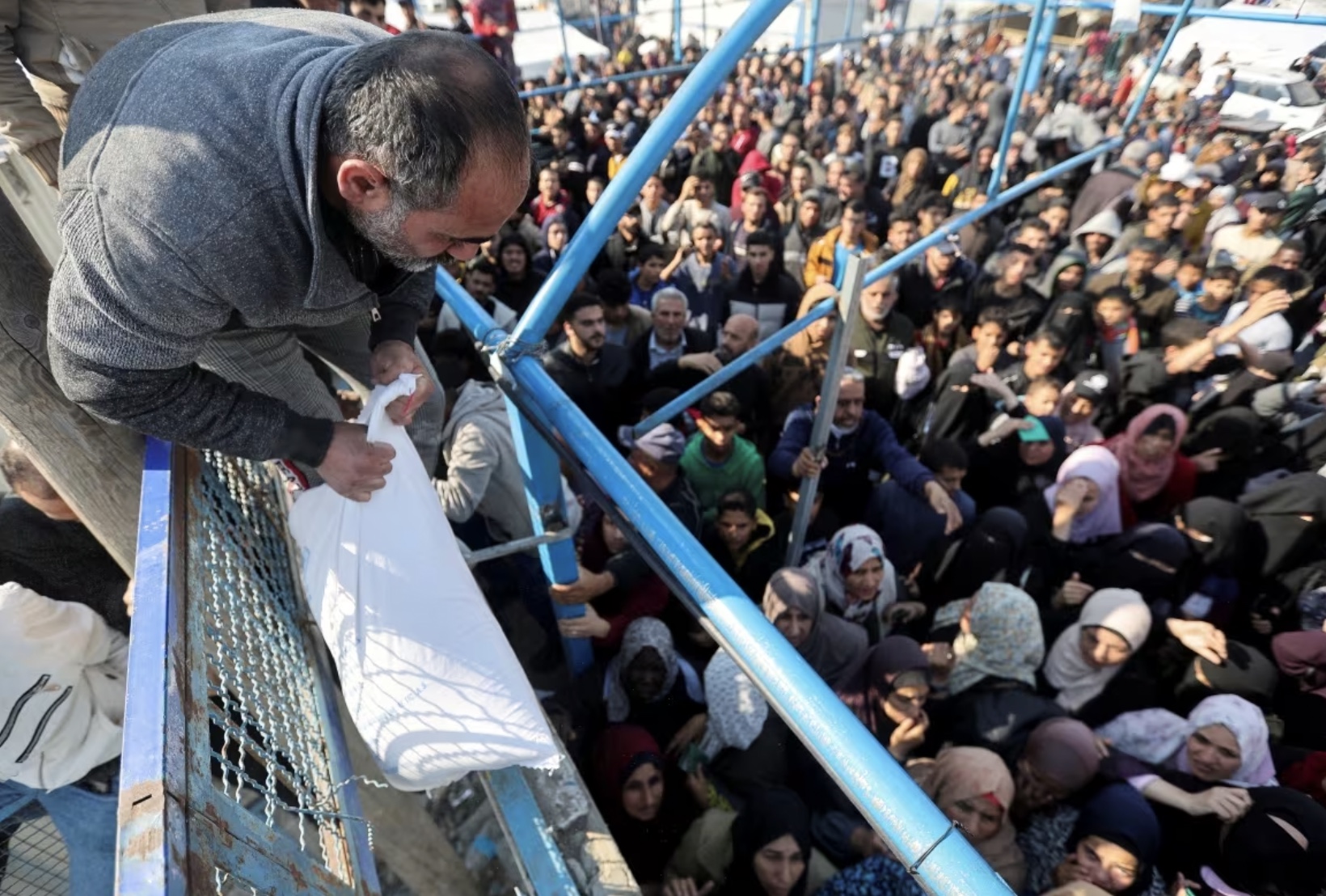
Joining the USA, Germany and several other countries, Canada announced it would withdraw urgently needed funding from the UN relief organization, UNRWA, which is the main source of humanitarian assistance, food, and emergency shelter for the almost 2 million displaced people in Gaza, most of whom are experiencing critical, life-threatening shortages of food, drinking water, and medical care.

On Friday morning, the Court (commonly referred to as the World Court at the Hague) had issued an interim order requiring that Israel do everything in its power to prevent genocide in Gaza, and prevent or punish incitement of genocide. The timing of Canadaโ€™s intervention to thwart the Court strongly suggests that its intent was to signal, both symbolically and materially, that countries sponsoring Israelโ€™s war would not allow a cessation of the deadly siege of Gaza before Israel has accomplished its aims, the very aims which had earlier in the day been found by the Court to be plausibly described as โ€œgenocidal.โ€

The reasons for the Courtโ€™s intervention on Friday morning are worth recalling in some detail. 

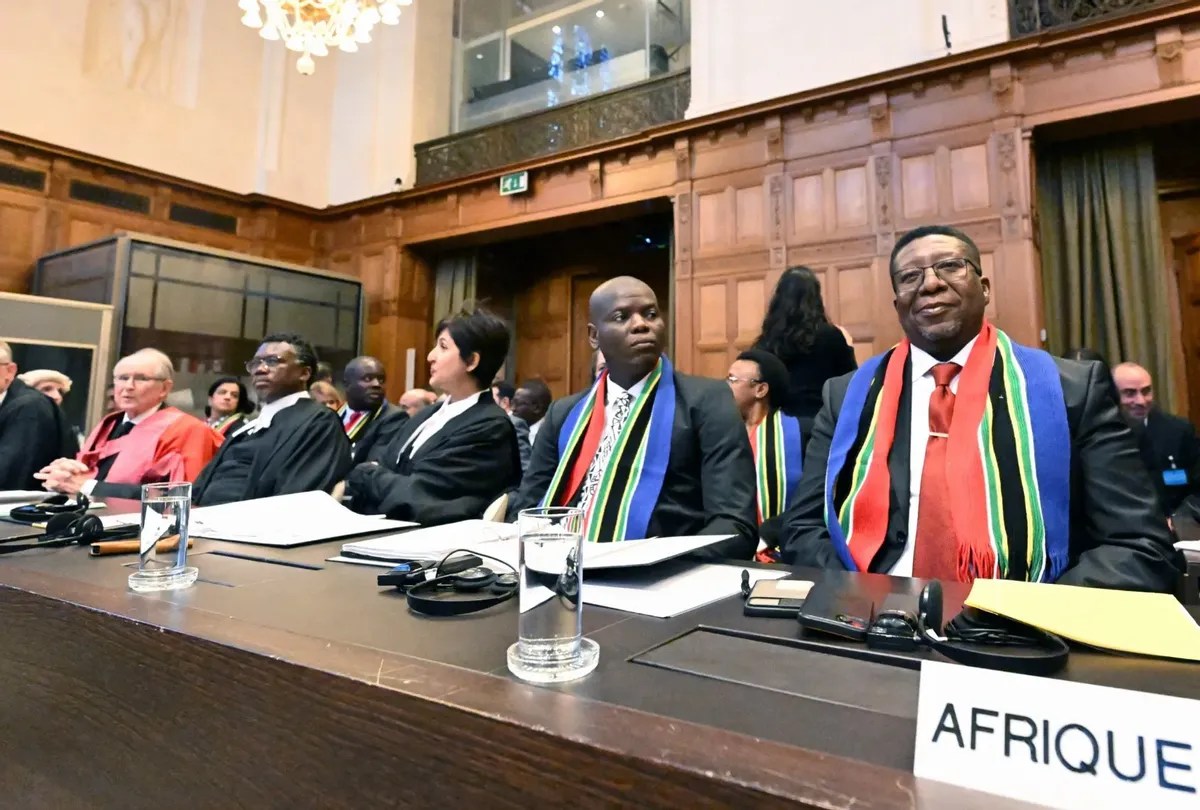
In explaining its reasoning (hereafter cited as โ€œICJโ€), the Court noted that, according to South Africaโ€™s application, Israel is, with genocidal intent, โ€œkilling Palestinians in Gaza, causing them serious bodily and mental harm, inflicting on them conditions of life calculated to bring about their physical destruction, and [enacting] the forcible displacement of people in Gazaโ€ (ICJ, p. 10). If these allegations from the South African legal team are true, then Israel is in violation of the 1948 Convention on the Prevention and Punishment of the Crime of Genocide (commonly called the โ€œGenocide Conventionโ€), to which both Israel and South Africa are signatories. The Convention expressly prohibits such genocidal actions and requires signatory countries to actively prevent them. It also requires countries to punish those who incite genocidal acts.

Weighing the evidence presented by South Africa, and the defence mounted by Israel, the Court determined that South Africa had made a plausible case that the Palestinian people in Gaza were at risk of genocide at the hands of Israel. In particular, the Court noted that โ€œwith respect to the right of the Palestinians in Gaza to be protected from acts of genocide and related prohibited acts,โ€ South Africaโ€™s evidence was sufficiently convincing that the Court found it necessary to act, and to order necessary measures to protect Gaza from the threat of genocide. 

As evidence for its findings, the Court cited information provided by officials, agencies, and rapporteurs of the United Nations and the World Health Organization, most of which were brought forward initially by the South African legal team. For instance, the Court cited the statement made by a UN Emergency Relief Coordinator, Martin Griffiths, earlier in January: 

Gaza has become a place of death and despair. Families are sleeping in the open as temperatures plummet. Areas where civilians were told to relocate for their safety have come under bombardment. Medical facilities are under relentless attack. The few hospitals that are partially functional are overwhelmed with trauma cases, critically short of all supplies, and inundated by desperate people seeking safety. A public health disaster is unfolding. Infectious diseases are spreading in overcrowded shelters as sewers spill over. Some 180 Palestinian women are giving birth daily amidst this chaos. People are facing the highest levels of food insecurity ever recorded. Famine is around the corner. For children in particular, the past 12 weeks have been traumatic: No food. No water. No school. Nothing but the terrifying sounds of war, day in and day out. Gaza has simply become uninhabitable. Its people are witnessing daily threats to their very existence while the world watches on.

Quoted in ICJ, p. 16.

The Court also took note of comments by Philippe Lazzarini, the Commissioner-General of UNRWA, earlier in January: 

This war affected more than 2 million people — the entire population of Gaza. Many will carry lifelong scars, both physical and psychological . The vast majority, including children, are deeply traumatized. 

Overcrowded and unsanitary UNRWA shelters have now become home to more than 1.4 million people. They lack everything, from food to hygiene to privacy. People live in inhumane conditions, where diseases are spreading, including among children. They live through the unlivable, with the clock ticking fast towards famine.

The plight of children in Gaza is especially heartbreaking. An entire generation of children is traumatized and will take years to heal. Thousands have been killed, maimed, and orphaned. Hundreds of thousands are deprived of education. Their future is in jeopardy, with far-reaching and long-lasting consequences.

Quoted in ICJ, p. 17.

The Court also considered numerous statements by Israeli officials at the very highest level which appeared to be explicit declarations of the regimeโ€™s genocidal intent in Gaza. Two (of many) examples will suffice to convey their basic character. The first is from Yoav Gallant, Israelโ€™s Minister responsible for the regimeโ€™s use of Armed Force. The day after announcing that Gaza would be cut off from all electricity, food, fuel, and medical supplies, Gallant declared: 

I have released all restraints. You saw what we are fighting against. We are fighting human animals. This is the ISIS of Gaza. This is what we are fighting against. Gaza won’t return to what it was before. There will be no Hamas. We will eliminate everything. If it doesn’t take one day, it will take a week, it will take weeks or even months, we will reach all places.

Quoted in ICJ, p. 17.

A second example noted by the Court is the statement of explicit genocidal intent by the President of Israel, Isaac Herzog, who declared openly that the aim of the war is to โ€œbreak the backboneโ€ of โ€œan entire nation,โ€ explicitly including the entirety of non-combatant Palestinian civilians:

Unequivocally it is an entire nation out there that is responsible. It is not true this rhetoric about civilians not aware, not involved. It is absolutely not true. They could have risen up. They could have fought against that evil regime which took over Gaza in a coup d’รฉtat. But we are at war. We are at war. We are at war. We are defending our homes. We are protecting our homes. That’s the truth. And when a nation protects its home, it fights. And we will fight until we’ll break their backbone.

Quoted in ICJ, pp. 17-18.

In light of the systematic destruction of Gaza, and the catastrophic level of death, disease, trauma and extreme hunger, the Court stated that it โ€œconsiders that the civilian population in the Gaza Strip remains extremely vulnerable. It recalls that the military operation conducted by Israel after 7 October 2023 has resulted โ€ฆ in tens of thousands of deaths and injuries and the destruction of homes, schools, medical facilities and other vital infrastructure, as well as displacement on a massive scaleโ€ (ICJ, p. 22). Accordingly, the Court found that โ€œthat there is urgency, in the sense that there is a real and imminent risk that irreparable prejudice will be caused to the rights found by the Court to be plausibleโ€ (ICJ, p. 22), namely, โ€œthe right to be protected from genocide and related prohibited actsโ€ (ICJ, p. 21).

On these grounds, the Court judged that it was obligated to intervene, by issuing six provisional orders, which it sets out as follows: 

  1. The State of Israel shall, in accordance with its obligations under the Convention on the Prevention and Punishment of the Crime of Genocide, in relation to Palestinians in Gaza, take all measures within its power to prevent the commission of all [prohibited] actsโ€ฆ, in particular:
    • killing members of the group; 
    • causing serious bodily or mental harm to members of the group; 
    • deliberately inflicting on the group conditions of life calculated to bring about its physical destruction in whole or in part; and 
    • imposing measures intended to prevent births within the group;
  2. The State of Israel shall ensure with immediate effect that its military does not commit any acts described in point 1 above [namely, killing members of the group, etc.];
  3. The State of Israel shall take all measures within its power to prevent and punish the direct and public incitement to commit genocide in relation to members of the Palestinian group in the Gaza Strip.
  4. The State of Israel shall take immediate and effective measures to enable the provision of urgently needed basic services and humanitarian assistance to address the adverse conditions of life faced by Palestinians in the Gaza Strip;
  5. The State of Israel shall take effective measures to prevent the destruction and ensure the preservation of evidence related to allegations of acts within the scope of Article II and Article III of the Convention on the Prevention and Punishment of the Crime of Genocide against members of the Palestinian group in the Gaza Strip;
  6. The State of Israel shall submit a report to the Court on all measures taken to give effect to this Order within one month as from the date of this Order. 

โ€ƒโ€‚— ICJ, pp. 24-26.

Now, the most notable of these provisions are the initial ones: first, that Israel is ordered to take all measures in its power to prevent the commission of genocidal acts, and second, that in particular Israel must ensure that its military does not engage in โ€œkilling members of the group [Palestinians in Gaza],โ€ nor โ€œcausing serious bodily or mental harm to members of the group,โ€ nor โ€œdeliberately inflicting on the group conditions of life calculated to bring about its physical destruction in whole or in partโ€ (ICJ, p. 23). 

These requirements seem to go beyond the one thing the Court did not mention, a โ€œceasefire.โ€ In a ceasefire scenario, Israel could certainly continue โ€œdeliberately inflicting on the group conditions of life calculated to bring about its physical destruction in whole or in part,โ€ notably by continuing its total siege of Gaza, its denial to Gaza of desperately needed food, drinkable water, energy, and medicine. The Court bluntly required Israelโ€™s regime to stop killing and injuring people in Gaza, and to stop inflicting conditions of hunger, thirst and disease on them. Even so, it is fair to criticize the Court for leaving the issue of a ceasefire out of its decision: its omission leave a wider range of options open to those hoping to thwart its aims in issuing the order, the protection Gaza from the threat of genocide.

Israelโ€™s response to the Courtโ€™s initial findings (of plausibility) and provisional orders, in public, has been to dismiss the Court. Netanyahu, the regimeโ€™s Prime Minister, stated in a video response in English that Israel had โ€œa sacred commitment to continueโ€ its military onslaught against Gaza, which he described as defensive. Netanyahu cited as justification for his defiance of the Courtโ€™s order to cease killing people in Gaza Israelโ€™s โ€œinherent right to defend itself.โ€ The charge of genocide, he claimed, is โ€œoutrageous.โ€

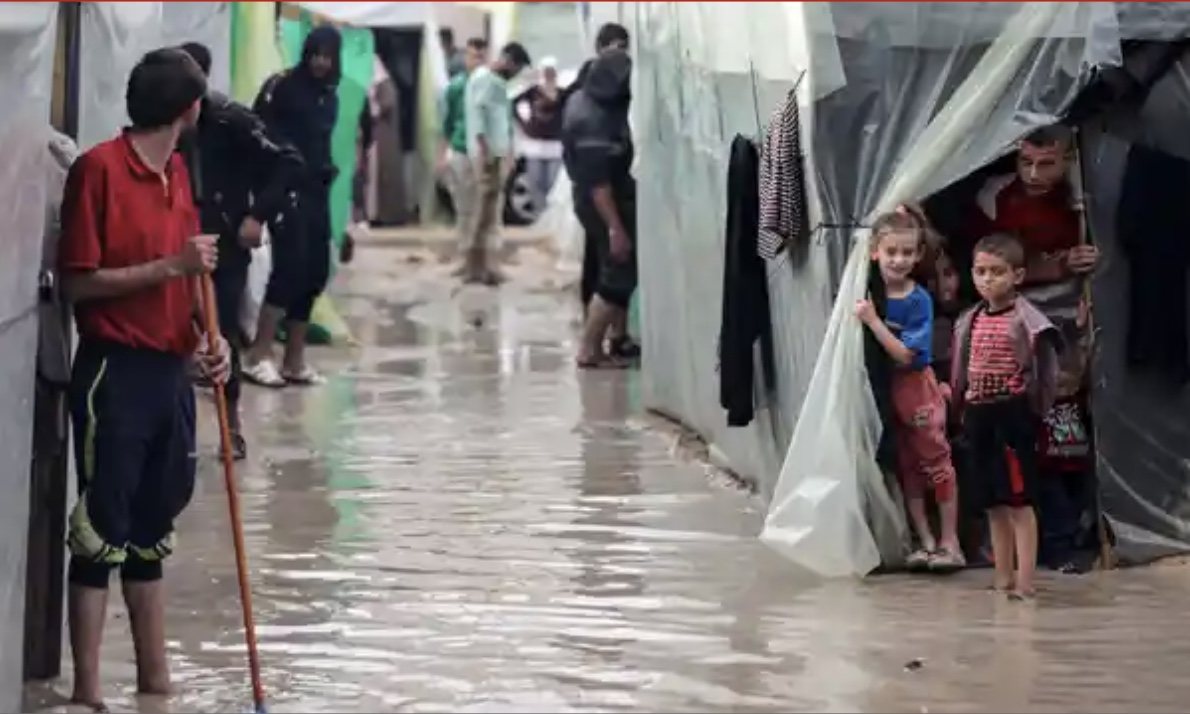
But — as noted at the outset, above — the regimeโ€™s public repudiation of the Courtโ€™s findings and provisional orders was bolstered by a simultaneous multilateral response undertaken by Israel and its main sponsor states, including Canada. It took the form of a morally shocking attempt to block efforts by the United Nations Relief and Works Agency (UNRWA) to provide life-saving humanitarian assistance to Palestinians in Gaza. As noted above, UNRWA is the most important provider of humanitarian assistance to Gaza, by far. Currently at least 1.3 million residents of Gaza are living in camps operated by UNRWA, which is trying to provide minimal shelter to those displaced by the devastating military onslaught of the past 100+ days.

The two-phased multilateral attack on UNRWA unfolded very quickly, over a period of hours, timed carefully to serve as an immediate, very high-profile rejoinder to the Courtโ€™s ruling. (Among other things, the timing was apparently an offer of cover to racist news media outlets that wanted to minimize coverage of the ICJ ruling.)

Israel initiated the first phase by issuing an accusation on Friday morning, which it said was based on โ€œinterrogations of militantsโ€ (and here it would be irresponsible not to mention the documentation by Israeli human rights organization Bโ€™Tselem, which shows that Israel security officials use torture and abuse during interrogations). Israel alleged that, of the 30,000 employees of UNRWA (13,000 of whom work in Gaza), as many as a dozen may have participated in or somehow assisted the 7 October armed attack on Israel, which illegally killed 766 civilians, in addition to the 373 Israeli armed combatants who were killed during the battle, according to numbers published by the Israeli government. These accusations of criminal conduct against 12 UNRWA employees may or may not be substantiated in the coming weeks, but UNRWA fired all of the (surviving) individuals in any case, simply on the basis that an accusation had been made against them. 

The second phase of the multilateral response to the Courtโ€™s ruling involved at least ten countries taking coordinated action against UNRWA to starve it of the funds it needs to operate in Gaza, using Israelโ€™s accusations against the 12 UNRWA employees as pretext. Predictably, the list of countries participating mostly reads like a โ€œwhoโ€™s whoโ€ of the history of colonial genocide: Canada, Germany, USA, the Netherlands, Australia, the United Kingdom, Italy, France, Finland, and Switzerland. The Gang of Ten countries announced in tandem that they would cut off all their funding to UNRWA, amounting to many tens of millions of dollars, deliberately deepening the risk to Gaza residents of genocide, on the very day that the World Court attempted to lessen that risk. Justin Trudeauโ€™s regime in Canada eagerly joined in, seemingly without remorse, indifferent (or worse) to the catastrophe it was actively fueling.

Now, obviously one expects this sort of behaviour from the government of Germany. For 150 years, Germany has repeatedly committed genocide, and can fairly be described as having a longstanding addiction to war crimes and genocides, most notably the Herero and Namaqua genocide and the Holocaust. The USAโ€™s role, too, can surprise no one: Israel is first and foremost a US client state, and the two regimes collaborate and coordinate their activities in the region at every level, militarily and diplomatically, usually in the mode of โ€œgood-cop/bad-copโ€ role-play, with the US green-lighting Israelโ€™s actions without having officially to admit responsibility for them. The idea of a multilateral attack on UNRWA to push back against the Courtโ€™s provisional measures may or may not have been cooked up in Washington, but one cannot even imagine that they might have hesitated before going โ€œall inโ€ on adopting it. The Netherlands, too, seems incapable of shaking its old genocide habit, and has exhibited in shameful ways its refusal to stand firm against genocide as recently as the 1990s. And what can one say about the UK, whose single-minded devotion to colonial genocide wreaked havoc on humankind and cursed the globe with its blood-soaked Empire for centuries? 

Those who know the Canadian state — including its long history of genocidal violence against indigenous people — will be likewise unsurprised by Canadaโ€™s participation in the attack on UNRWA and its defiance of the ICJ. But even the unsurprising can still shock: in this case it can, and really it should evoke a dropped jaw of disbelief. How dare they?! Where do they get the audacity to so brazenly attempt to bully the World Court into accepting the impunity of those who scoff in private, while feigning ambivalence in public, about the scope of the Courtโ€™s authority? 

It is sometimes said, misleadingly, that the World Court has no capacity to enforce its orders. What people mean is that the body charged with enforcement by the UN system, the Security Council, is permanently burdened with members from the most lawless of rogue states, most notably the USA, whose defiance of the Court may indeed go unpunished. But our commitment to basic decency, and our embattled sense of justice, is more than sufficient to point our fingers accusingly at the governments of Canada, Germany, the USA, the UK, France, Italy, Israel, and the rest. We know perfectly well that these states are led by criminals. 

The humane indignation against injustice animating South Africaโ€™s conduct only underlines the moral bankruptcy of these regimes who act continually to prop up criminality and brazen violence and to insulate its perpetrators from accountability. 

Courts will not stop them, certainly. But broadening and escalating the popular struggle, in every corner of the world, offers some hope that we can do what our rulers obviously refuse to do: stop the killing, bring the criminals to justice, and enforce the Courtโ€™s order to prevent the genocide.

Displaced Gazans try to stay dry in a flooded UNRWA camp.

South Africa’s Oral Arguments to the International Court of Justice (Audio Files)

The following audio files contain the oral arguments presented on 11 January 2024 by the legal team of the Republic of South Africa, to the International Court of Justice, in the Republic’s historic attempt to hold Israel accountable for violations of the Genocide Convention of 1949, to which both countries are signatories.

In South Africa’s Written Application, Charging Israel with Genocide (Click to view PDF), the Republic of South Africa describes it’s fundamental claims as follows:

“This Application concerns acts threatened, adopted, condoned, taken and being taken by the Government and military of the State of Israel against the Palestinian people, a distinct national, racial and ethnical group, in the wake of the attacks in Israel on 7 October 2023. South Africa unequivocally condemns all violations of international law by all parties, including the direct targeting of Israeli civilians and other nationals and hostage-taking by Hamas and other Palestinian armed groups. No armed attack on a Stateโ€™s territory no matter how serious โ€” even an attack involving atrocity crimes โ€” can, however, provide any possible justification for, or defence to, breaches of the 1948 Convention on the Prevention and Punishment of the Crime of Genocide (โ€˜Genocide Conventionโ€™ or โ€˜Conventionโ€™), whether as a matter of law or morality. The acts and omissions by Israel complained of by South Africa are genocidal in character because they are intended to bring about the destruction of a substantial part of the Palestinian national, racial and ethnical group, that being the part of the Palestinian group in the Gaza Strip (โ€˜Palestinians in Gazaโ€™). The acts in question include killing Palestinians in Gaza, causing them serious bodily and mental harm, and inflicting on them conditions of life calculated to bring about their physical destruction. The acts are all attributable to Israel, which has failed to prevent genocide and is committing genocide in manifest violation of the Genocide Convention, and which has also violated and is continuing to violate its other fundamental obligations under the Genocide Convention, including by failing to prevent or punish the direct and public incitement to genocide by senior Israeli officials and others.”

AUDIO FILES, ORAL ARGUMENTS, SOUTH AFRICA:

  1. Ambassador Vusimuzi Madonsala (MP3), Opening arguments, I
  2. Minister of Justice, Ronald Lamola (MP3), Opening arguments, II
  3. Adila Hassim (MP3), Risk of genocidal acts
  4. Tembeka Ngcukaitobi (MP3), Genocidal intent
  5. John Dugard (MP3), Prima facie jurisdiction
  6. Max du Plessis (MP3), Rights under threat
  7. Blinne Nรญ Ghrรกlaigh (MP3), Potential of irreparable harm
  8. Vaughan Lowe (MP3), Argument for provisional measures
  9. Ambassador Vusimuzi Madonsala (MP3), Closing arguments

VERBATIM TRANSCRIPTS of ORAL ARGUMENTS:

  1. Verbatim Transcript, South Africa’s Oral Arguments (11 January 2024)
  2. Verbatim Transcript, Israel’s Oral Arguments (12 January 2024)

โ€œWorld Turned Upside Downโ€: Gerwigโ€™s โ€˜Barbie,โ€™ Anti-systemic Politics, and the Marxist Tradition

We quite properly laugh contemptuously when the Far Right denounces Greta Gerwigโ€™s new film, Barbie, as an expression of โ€œthe woke ideology,โ€ which in turn is supposed to be the product of an imaginary phenomenon called โ€œCultural Marxism.โ€ But the brainlessness and superficiality of the Right should not stand in the way of our asking the legitimate question, could there be something to the idea that Barbie has genuine roots in the broad Marxist tradition?

I donโ€™t want to review Barbie โ€” itโ€™s too complicated and multi-layered, and I donโ€™t think I can really do it justice. But I do want to place here a few comments on the relation of Gerwigโ€™s Barbie to the Marxist tradition and anti-systemic politics. (Crucially important aspects of the film, about mothers and daughters, about culture and self-understanding, about the relation between the culture industry and social movements, and so on, are omitted here โ€” not because theyโ€™re not important to the film, or even to Marxism, but because thereโ€™s just too much to think and talk about. I imagine books and dissertations will be written about Barbie, and I look forward to reading them, but Iโ€™m only offering a few narrowly focused comments.)

When Gerwigโ€™s last film, Little Women came out, I noted in my review that she was engaging with ideas central to Marxism:

The film [โ€˜Little Womenโ€™] addresses what Marx calls the โ€˜two-fold character of labour,โ€™ or what the film depicts as the two forms in which a craft (like music-making, book-making, art-making, shoe-making, people-making, and so on) can have โ€˜valueโ€™: first, the value of what the film calls โ€˜a business proposition,โ€™ the value of buying and selling, marketing a product to a paying consumer; second, the value of what the film calls โ€˜importance,โ€™ which arises when someone carefully *crafts* something *for* someone: a sketch, a story, a musical performance, a play, a book, a pair of shoes, a novel. In almost every scene, someone is producing one or the other of these two forms of value, very often both. And the crucial question, in the plot, is who will โ€˜save the family,โ€™ and how? Will salvation come in the form of a business proposition or in the form of an act of crafting something for someone with care?โ€

In this new film, Gerwig implicitly engages again with Marxism, although not quite in its โ€˜classicalโ€™ version (that is, she does not engage with Marxโ€™s ideas as such). Instead, Gerwigโ€™s Barbie engages with an important offshoot of the Marxist tradition: Herbert Marcuseโ€™s vindication of the critical potential of utopianism and fantasy. (See, for a brief overview, Marcuseโ€™s essay, โ€œThe End of Utopia.โ€) Gerwigโ€™s reason for engaging with Marcuse โ€” precisely in this context โ€” is that Marcuse pondered deeply the very thing Barbie wants us to consider: that childhood fantasies of a life of freedom, ease and self-enjoyment, when confronted with the โ€˜reality principleโ€™ of a repressive society, cannot simply be taken on board as plausible descriptions of the world as it is, but they can be brought to bear as critical resources for accusing the status quo (patriarchal capitalism) of irrationally withholding from us the free and fulfilling lives that we long to attain for ourselves and those we care about and care for.

The central plot trajectory of Barbie (no spoilers!) is that a working-class Latina named Gloria (a Mattel employee, as it happens) reconfigures her relation to, and in a way lets go of her nostalgic attachment to, the utopian-fantastical impulses of her girlhood, but not before vindicating the critical importance of those impulses in the โ€˜Real Worldโ€™ (in a double sense of critical as โ€˜being indispensableโ€™ and โ€˜challenging to systems of power.โ€™) Gloriaโ€™s fantasy-Barbie will cease to be โ€˜an idea,โ€™ a perfectionist fantasy, and become integrated into Gloriaโ€™s real life as an anti-systemic impulse and critical resource for a fully embodied working-class woman to value deeply and fight passionately for the liberation and happiness of herself and other women, in a โ€˜Real Worldโ€™ that for now remains determined to subject women to the โ€˜reality principleโ€™ of capitalist patriarchy.

The key to Gloriaโ€™s vindication of the Barbie Land utopia โ€” fending off the attempt of patriarchy (the Kens) and capitalism (the Mattel executives) to โ€œput Barbie back in the boxโ€ โ€” is to turn Barbieโ€™s utopian dimension, embodying the young girlโ€™s fantastical, imagined life of freedom and equality, against the forms of domination and exploitation that those systems always want Barbie to serve. Barbie forced into the box is a โ€˜fascistโ€™ (as Gloriaโ€™s daughter puts it) and anti-woman source of misery, but the utopian Barbie deployed โ€œagainst and beyondโ€ the box, as a vehicle for articulating anti-systemic needs, aspirations and critical insights about unfreedom and exploitation, is a critical ideal that can embrace women as they are, while pointing toward the utopian project of a liberation from patriarchy and capitalism. In this way, Barbie Land as critical utopia of repressed possibilities for emancipated womanhood operates in relation to the Real World as counter-ideal, a โ€œworld turned upside down.โ€

The basic literary device for exploring all this in Gerwigโ€™s Barbie is the duplication of Gloria into her real-world self and Barbie. Barbie is Gloriaโ€™s childhood fantasy of living perfectly, free of constraints or threats or stares or insults. But as long as Barbie lives in that mode, as trouble-free fantasy Barbie, Gloria remains stuck in a double world. On the one hand, there is who she is, as a working-class mom living in the Real World (where the constraints, aggressions, and humiliations that are banished from Barbie Land remain fully in effect). On the other hand, there is who she imagined she was supposed to be, in Barbie Land (the โ€œperfectโ€ world of her childhood fantasy of freedom and playful self-enjoyment).

The transition from girl to woman, from fantastical imagining of trouble-free life, to the real world of patriarchal troubled struggle-life, can take either of two forms, Gerwigโ€™s film suggests: in the system-adaptive mode, Barbie can operate in the womanโ€™s psyche as a generator of self-doubt, self-disappoint, even self-hatred, in which Barbie lives on as a kind of self-accusation or constant critic; alternatively, though, Barbie can operate in the as a vehicle for critical challenges to the repressive and oppressive systems that deny possibilities of freedom and ease that are in fact available in principle, in which case Barbie operates instead as a utopian impulse and a vindication of repressed needs and hopes. In Barbie Gloria and her comrades discover that this second, critical-utopian Barbie has to be take root in anti-systemic political movements, for example in the form of collective โ€˜consciousness-raisingโ€™ where critical insights about sexism are developed and taken seriously. But the latter, the anti-systemic and woman-positive Barbie, operating in-against-and-beyond patriarchal capitalism in the Real World, is ultimately a scenario in which Barbie has to โ€˜dieโ€™ for Gloria, in the sense that the doubling of Gloria into her real self and the Barbie fantasy has to give way to a willingness to say YES to actual women, including herself as an actual woman, while saying NO to the back-in-the-box โ€œreality principleโ€ of the Kens and the Mattel execs. Barbie has to be retired as fantasy, and that means also that Barbie is revived as a living embrace of embodied women struggling to break out of the โ€œboxโ€ of repressive patriarchal capitalism.

In the end, the journey of Gloria โ€” the main character, in so far as Barbie is a part of Gloria โ€” along the โ€˜pink brick roadโ€™ is a journey of integrating something that has come to seem alien to her: a childhood fantasy that imagined life as playful freedom and being-oneself whole-heartedly. What the film argues is that women and girls have to actively integrate Barbie into the Real World, in the form of a kind of feminist critique and refusal of patriarchy, a reassertion and vindication of the relevance and the emancipatory-utopian energies of those childhood fantasies of freedom and fulfillment.

Anyway, Gerwigโ€™s turn from Marx (in Little Women) to Marcuse (in Barbie) is interesting, even if it is bound to be controversial among Marxists. I think it suits Barbie โ€” which for obvious reasons foregrounds the play and fantasy dimension, so important to Marcuse. It is arguably a dimension of the broad Marxist tradition that is more relevant to the stakes here. But does Barbie do enough to think through Gloriaโ€™s situation as a working-class woman? To be sure, the figures of โ€˜President Barbieโ€™ and โ€˜Supreme Court Barbieโ€™ are presented as childhood fantasies that are bound to be disappointed by real-world capitalism and patriarchy โ€” they are not supposed to be realistic aspirations. Gerwig never stoops to denialism about class: quite the reverse. Ultimately, the idealism of Barbie Land is presented as something that can go either way: if it is forced by patriarchal capitalism back into the box, it becomes a prison for women, a form of social control. But the forms of struggle that Barbie foregrounds, especially the classical form of โ€˜consciousness-raising,โ€™ do not really seem, even in the film, to open up the possibly of decisively defeating the systems they ruthlessly critique. So, there are important questions that Marxism wants to foreground, questions of strategy and the sources of anti-systemic power for working-class women like Gloria, which here (for both Gerwig and Marcuse) remain in the background.

But Gerwigโ€™s basic claim is at least one that Marxists should find interesting: that, if girls and women can protect Barbie Land from being overrun by Kens and corporations and integrate Barbie into their critical relation to the Real World, as an anti-systemic utopian impulse, operating โ€œin, against and beyondโ€ capitalist patriarchy, then utopian Barbie can be a vehicle of critique and refusal, and serve the self-affirmation of women against systems that continually negate them.

___________________________

โ€œShe thinks Iโ€™m a fascist?! I donโ€™t control the railways, or the flow of commerce!โ€

Related: Review of โ€˜Sorry to Bother Youโ€™ โ€” Is it the Most Marxist Film Ever Made?

Marxism as a Learning Process

โ€œLearn, learn, learnโ€ฆโ€

[printable copy]

By Stephen Dโ€™Arcy

In everyday justifications offered on behalf of contested claims, simply noting that someone once said something about case X offers little or no help in substantiating a claim about case Y, regardless of how esteemed the speaker may have been. For instance, if I want to know how many people live in Greater Manchester today, it is of very little help to cite the remark by Friedrich Engels, in The Condition of the Working-Class in England in 1844, that Greater Manchester โ€œcontains about four hundred thousand inhabitants, rather more than lessโ€ (Engels 1892, p. 45). Similarly, albeit less obviously, if I want to determine the nature of a revolutionary process in the 21st century, I would seem not to get very far by quoting Karl Marxโ€™s assertion, made in 1848, that the French Revolution at the end of the 18th century was โ€œthe victory of bourgeois property over feudal property, of nationality over provincialism, of competition over the guild, of the partition of estates over primogeniture…, of civil law over privileges of medieval origin.โ€ As interesting as these comments by Engels and Marx may or may not be, they were simply not talking about, and for essential reasons were incapable of making informed judgments about, events or facts occurring over a century after their respective deaths. This much seems utterly uncontroversial. Nevertheless, in marxism, it is common to justify or to criticize claims made in the context of debates today by quoting statements made by Marx, Engels, or other โ€˜classicalโ€™ figures in the marxist tradition, like Lenin or Luxemburg, concerning issues or debates from the 19th or early 20th centuries. These quotations are supposed to serve not simply to enliven oneโ€™s writing with memorable aphorisms, but to justify important and contested claims.[1] It is for this reason that this practice is controversial.

Often, critics condemn what they call a โ€œreligiousโ€ attitude toward Marx (and other figures and texts with — I dare say — โ€œcanonicalโ€ status). The metaphorical or analogical accusation of โ€œreligiosity,โ€ in this context, is a rhetorical means of ascribing to others a certain kind of epistemic irrationality, namely, what the critics deem to be a superstitious stance of deference to ancestral authority. For ease of reference, I refer to this way of objecting to the justificatory deployment of โ€˜classicalโ€™ formulations as โ€˜anti-citationalism.โ€™ Conversely, I use the term โ€˜citationalismโ€™ to label the practice of citing classical formulations as if they should be regarded as somehow epistemically authoritative in contemporary debates, in spite of the passage of time and the changing of circumstances.

The anti-citationalist, typically, likes to claim the mantle of rationality and to assume the posture of guardian and guarantor of evidence-based scientificity, determined to hold encroaching unreason at bay. But, notwithstanding its self-assured stance of secular modernity and its air of epistemological sophistication, this resistance toward the citation of classical texts in a justificatory role is misguided, at least in very many cases. In this paper, I want to explain where the anti-citationalist position goes astray.

In order not to miss what is at stake in the citationalism controversy, it is necessary to appreciate upfront that the kind of justification offered by citers of Marx and other classical figures is not empirical, in the sense of offering independent factual evidence to support a claim about what is held to be observably the case. Instead, the citationalistโ€™s appeal is to a judicious precedent, that is, the precedent of a sound judgment offered in an earlier, admittedly different, yet relevantly similar set of circumstances. This appeal has less to do with religious justification (as in, โ€œThe Holy Bible saysโ€ฆ.โ€) than with common-law juridical justification (as in, โ€œThe Court held in a relevantly similar case that the principle of freedom of association was applicable under circumstances of this typeโ€ฆ.โ€). A crucial step on the way to vindicating the rationality of citationalism, therefore, is to show that (and in what manner) common law legal reasoning from analogous precedent is — when it is done well, and not poorly — quite capable of qualifying as epistemically rational. 

In this paper, I approach this matter in four steps. First, I draw attention to an assumption that seems to motivate anti-citationalist doubts about justifications of this type, namely, the assumption that the epistemic value of a quotation must be equivalent to what we learn from the quotation itself, from someone having said that. Second, I introduce the idea of justification by recapitulation, which Hegel called โ€œErinnerungโ€ (recollection) and which is now more commonly known as โ€œrational reconstruction.โ€ According to this idea, one way to justify a claim is to retrace the steps of the learning process by virtue of which we came to be rationally motivated to adopt the claim in the first place. Third, I argue that common-law juridical justification, the legal or jurisprudential variant of the more general phenomenon of precedential reasoning, is rational because and to the extent that it appeals to the discoveries of a cumulative learning process that generates an evolving intellectual inheritance shared by a community of co-inquirers. This inheritance establishes a (defeasible) presumption in favour of ensuring consistency of new judgments with the accumulated stock of previously recognized insights that comprise the tradition. Because cited precedents are presumed to be susceptible to defence by recapitulative justification, the burden of justifying contrary views that break with that inheritance is relatively demanding. Fourth, I draw attention to the fact that the citation of a precedential case in juridical justification can take the form of simply naming the case, as in R. v. Oakes or Roe v. Wade, without explicitly restating all the reasoning or evidence considered in the cited case. This is sufficient, normally, because (by hypothesis) it is a presumptively well-founded established precedent. So too in the citation of canonical (that is, precedential) formulations in marxist social science, the reliance on the short form of citation (that is, merely quoting a single sentence or short passage) implies no deficiency of epistemic rationality, as long as the appeal to learning processes already traversed and susceptible to rational reconstruction can be vindicated on demand. Finally, fifth, having explained the basis for the assumption that the citation of classical formulations is epistemically rational, I illustrate the analysis with two examples drawn from recent debates within marxist social science, in which canonical formulations inherited from the tradition are deployed in a justificatory role, and which are not plausibly seen as irrational in the way that anti-citationalism imagines such justifications to be. In a brief conclusion, I explain why this type of justification is not limited to any particular category of claims, like descriptive, explanatory, or normative claims, but applies to any class of claims that admit of cumulative learning processes to which later inquirers can appeal in the mode of precedential โ€œrecollection.โ€

The Anti-Citationalistโ€™s Motivating Worry

Consider a typical expression of anti-citationalism, to be found in the work of a marxist philosopher of science, Brian Aarons. He writes:  

[M]any marxist intellectuals and revolutionary activists โ€ฆ think that just because Marx or Lenin or Mao wrote something it must therefore be right. For too long this sort of thinkยญing has led to โ€˜proof by quotationโ€™ arguments, which are very often futile because the quotations are treated as holy writ, as well as being usually quoted out of the conยญtext of the text and the times in which they were written.[2]

I note that Aarons describes the citation of classical formulations as โ€œvery often futile,โ€ not futile by their very nature. But I am less concerned with replying to this specific formulation than elucidating the type of worry that motivates the anti-citationalist objection as such. Aarons points to three features of the citationalist move: first, the reverential attitude toward the โ€œcanonicalโ€ source (โ€œholy writ,โ€ true because someone special uttered it); second, the gap in historical context between the original text and the chronologically later citation of it in a different setting; and third, the disembedding of the cited judgment from the context in which it was originally articulated.

It is not actually my intention to push back against these worries on their own terms. I do not, for instance, object to the thought that — other things being equal — it would be epistemically irrational to believe some claim p is true, just because someone deemed to be important or special had long ago uttered the claim that is true. Nor do I deny that the historical context in which some judgment was made could make it epistemically irrational to simply apply the same judgment to questions arising in a very different context. Nor, finally, do I reject the worry that a quoted passage, taken out of its original context, can change its meaning and can go from โ€˜trueโ€™ to โ€˜falseโ€™ by being improperly or carelessly recontextualized. My response to worries of the sort expressed by Aarons is more subtle than a straightforward rejectionof these points. Essentially, my claim is that they grossly understate the epistemological sophistication of the very practice of citing canonical formulations in a justificatory role. Put differently, my objection to Aaronsโ€™ criticisms is that they underestimate the resources available for epistemically rational judgment that are already found within the practice of reasoning from cited precedents. To see why, we need to adopt a more curious and perhaps a more charitable approach to analyzing the type of reasoning that the citationalist brings into play.

Dialectical โ€˜Erinnerungenโ€™: The Epistemic Rationality of Retracing our Steps

The first part of the picture I want to sketch here is the dialectical model of justification via recapitulation, or what Hegel calls โ€œErinnerungโ€ (recollection).[3] Hegelโ€™s โ€œErinnerungenโ€ (recollections) are called โ€œrational reconstructionsโ€ by the Marxist philosopher of science, Imre Lakatos, and for the most part thatโ€™s the term I use here, although the terms roots in Hegelโ€™s conception of inquiry is important to take into account, since the marixist practice of precedential reasoning emerged from the same tradition.[4] This is the model of scientific justification that Marx invoked when he articulated his โ€œaprรจs-coupโ€ principle. Marx claims, in the first volume of Capital, specifically in the slightly expanded French edition, that โ€œscientific analysisโ€ of โ€œthe forms of human lifeโ€ must take โ€œa course directly opposite to that of their real [historical] development,โ€ so that the analysis โ€œbegins post festum [aprรจs coup]…with the results of the process of development ready to handโ€[5] in advance. A scientific account of capitalism, for example, begins with what we know capitalism to be, and rationally reconstructs its emergence in retrospect, by retracing the steps of its emergence and elucidating the imperatives to which each of those steps responded. In Marxโ€™s case, however, what is at stake is not justification, but causal explanation. One explains how capitalism followed a certain developmental trajectory by reconstructing the causalimpact of systemic imperatives to which it was, at each stage of its development, responding. Hegel, however, is more concerned with rational reconstruction in the sense of retrospective recapitulation of the rational insights, especially the correction of mistakes, that motivated us to change our minds, or (in many cases) to enrich or complicate our conceptual repertoires or vocabularies, in response to deficiencies of earlier, now-superseded understandings. This Hegelian mode of recapitulation does not just explain our change of mind; it justifies successor views by elucidating how they correct mistakes, or otherwise offer epistemic enhancements, and so embody advances in relation to their predecessors.

Hegelโ€™s books are essentially all rational reconstructions, in this sense, but none more explicitly so than his first and most important book, the Phenomenology of Spirit. There, he begins, aprรจs-coup, in Marxโ€™s sense, with what we now know to be true, having already traversed a learning process. Looking back from this epistemically privileged standpoint he justifies this claim to know what we believe to be so by means of a retrospective rational reconstruction, retracing the steps of the learning process, reactivating the insights that propelled us past earlier, now โ€˜relativizedโ€™ steps along the path, which we now know to have been inadequate (what he would call mere relative knowing, as in โ€œit seemed so at the time,โ€ in contrast to โ€œwhat we now know to be so,โ€ full stop, or so-called โ€˜absoluteโ€™ knowing), because they proved in the course of ongoing learning to be unable to account for insights integrated into their successor stages of a learning process that left them behind. On this model of learning, we move forward by accumulating insights, correcting the deficiencies of predecessor views while integrating what was relatively correct in them, a process Hegel dubs โ€œsublation.โ€

When I describe Marxism as a learning process, it is to the Hegelian conception of justification by rational reconstruction that I intend to appeal. Marxism is a cumulative learning process in which insights are taken on board. These insights can be invoked later, using the short form of citation typified by the practice here named โ€˜citationalismโ€™: invoking a presumptively authoritative precedent, as part of a learning process that we — participants in the tradition — have already traversed. 

From the Retracing of our Steps to the Citation of our Precedents

The citation of a canonical judgment inherited from a research tradition in which we claim to participate is not, in and of itself, justification by rational reconstruction, in the dialectical (Hegelian and Marxian) sense reviewed above. In crucial respects, the mere citation of a classical source stops short of recapitulation. In particular, the citational gesture is terse to the point of controversiality. One can hear a debate partnerโ€™s invocation of a one- or two-sentence quotation from the Communist Manifesto or Capital and think, โ€œIs that your only argument?โ€ This reaction from the citationalistโ€™s skeptical interlocutor is, if not exactly correct, at least understandable. It responds to the fact that the citationalistโ€™s quotation dislodges a fragment from a larger intellectual and historical context, and then recontextualizes it by inserting it into a different debate, addressing different circumstances, in a different time and place.[6] Extracting two or three sentences from a book like Capital, and recontextualizing them into the back-and-forth of a 21st-century debate, could well appear to be a grossly questionable or even careless procedure, especially if the alleged relevance of the quoted passage extended no further than the sheer worthiness to high esteem attributed to the quoted author. 

However, these doubts are based, in most cases, on a misunderstanding of what the citationalist is up to. The citation of an inherited, canonical judgment is important to us for a very specific reason, not taken into account by the anti-citationalist. We care about the quoted passage, not because the one who uttered it is an object of reverence, but because the passage is the repository or trace (in the sense of footprint) of insights emerging from a learning process that we, who take it as presumptively authoritative, could in principle rationally reconstruct, if called upon to do so, normally by recapitulating a learning process that has already been traversed, probably at the time of the initial formulation (and typically recorded in the larger canonical expression of the cited view). Thus, although the actual citation of the precedential judgment does not contain a justifying recapitulation, the epistemological authoritativeness of the cited precedent is grounded in the availability in principle of a rational reconstruction of its emergence from an insight-motivated learning process. 

We can shed light on the epistemological infrastructure of this practice by considering a parallel in the law. Citationalism in social-scientific research is comparable, epistemologically, to the practice of attributing epistemic authoritativeness to the citation of case law in common-law jurisprudence. The authority of the citation of a previously decided case as precedent, which may take the form of a mere mention of a caseโ€™s name (such as, to cite a famous example, Roe v. Wade), or at most an extremely terse summary of a key conclusion, will seem epistemologically mysterious if we lose sight of its relatively complex epistemological structure. There is nothing magical about invoking the name of the decision, nor of the judge or court that generated it. Rather, the caseโ€™s claim to our attention in a present-day debate, as an authoritative precedent that is presumptively binding on us in todayโ€™s different circumstances, rests on a dual claim that the basis on which the decision was made in the cited case is, first, well-founded by reasoning that is normally recorded in the original decision, or otherwise could be stated or restated by those counting it as precedential, and second, originating as a judgement about an earlier case that is relevantly similar to the one under consideration today. If the best reasoning available to support the supposed precedent were found to be a rationally baseless โ€œhunch,โ€ or some now-discarded theory that was misjudged at the time to be informative, then the presumption in favour of the earlier decisionโ€™s bindingness on us would be weak to the point of irrelevance (rationally, if not legally). In just this way, precedents are discarded and overridden over time, as the reasoning on which they rest loses its grip on us. Likewise, if the circumstances under which the decision was made were so different as to cast serious doubt on the applicability or relevance of the precedent to this case, under these circumstances, then once again it would lose its authoritativeness as applied to our situation. If, however, on the contrary, the reasoning is not found wanting or unavailable, and the circumstances are apparently similar in all crucially relevant respects, then the bindingness of the precedent is presumptively dispositive. (The word โ€œpresumptively,โ€ of course, implies also the possibility of defeating the presumption; but doing so rationally requires that there be a compelling basis for setting aside the precedent, because there is an epistemological asymmetry between a firmly established precedent, on the one hand, and a possibly eccentric or capricious departure from that established precedent, on the other hand.)

Some Examples

I want to conclude by illustrating this analysis with two simple but vivid examples. These examples illustrate the type of claim that citationalism legitimizes, namely, justification by citation of a judgement recorded in a canonical formulation that encapsulates an insight arrived at via a learning process that the tradition has already traversed. I do not take a position on whether the justifications in these examples are convincing, all things considered. My only claim is that the anti-citationalist objection reviewed above falls flat, when we understand properly what is happening in these appeals to โ€˜classicalโ€™ sources. 

First, consider the case of the debate between John Holloway and Michael Lebowitz in 2005, in the journal Historical Materialism. At issue, centrally, was the anti-statist position of Holloway, according to which the anti-capitalist left should refrain from aiming to โ€œtake power,โ€ in the sense of wielding governing authority in the context of the capitalist state.[7] Lebowitz complained that refraining from taking power over the capitalist state was, as he put it, โ€œa profound rejection of Marx.โ€ Holloway, in response, cited a classical passage from Marx, one that Marx not only wrote, in the Eighteenth Brumaire of Louis Bonaparte from 1858, but also quoted — citing his own work — in the Civil War in France from 1871: โ€œthe working class cannot simply lay hold of the state machinery and wield it for its own purposes.โ€[8] On one level, this looks like a debate about who is and who isnโ€™t โ€œprofoundly unmarxist,โ€ with Holloway using a quotation from Marx to underline his own claim to a more rigorous form of orthodoxy, confirming that Marx himself endorsed Hollowayโ€™s view and rejected that of Lebowitz. However, there is more to the citation than that, because Holloway notes precisely the crucial variable that concerns me in this paper: the citation as a repository of insights gleaned from a learning process already traversed. Exactly in this spirit, Holloway accuses Lebowitz of forgettingsomething already learned. He writes: โ€œ[Lebowitz] prefers to forget that [Marx and Engels] revised their understanding of revolution and the state after the experience of the Paris Commune.โ€[9] In this way, Holloway draws attention to what I earlier called the epistemological infrastructure of the citationalistโ€™s practice: the invocation of a canonical passage from the research tradition to highlight how an interlocutor has forgotten something that has already been learned, and reverted to a retrograde intellectual position, one that has already been surpassed by the community of co-inquirers who share the inheritance of that cumulative learning process. In the sequence of texts invoked by Holloway, a learning process is recorded, and Holloway reminds Lebowitz of a sequence in which a mistake about the capitalist state has already been exposed and corrected.

Hollowayโ€™s citationalism, in this instance, purports to be epistemically rational, because it draws attention to an epistemological asymmetry between statism (or capturing the capitalist state) and anti-statism (or โ€˜smashingโ€™ the capitalist state) in the marxist tradition, such that a special justificatory burden falls on the statist to overcome the justificatory weight, the precedential authoritativeness, of Marxโ€™s reasons for casting doubt on projects of their type on the basis of the experience of the Paris Commune and other accumulated experiences and insights. Superstitious appeals to ancestral authority play no role in this justificatory move.

Consider, now, a second example: the decision of Nisancioglu and Anievas to cite Marxโ€™s Capital on the โ€œchief moments of original accumulation,โ€ as including colonial dispossession, chattel slavery, and other aspects of early-Modern history deemed by so-called โ€œPolitical Marxistsโ€ (like Robert Brenner and Ellen Meiksins Wood) to be exterior to the causal origins of capitalism and excluded from the category of original (ursprรผnglich) accumulation:

The discovery of gold and silver in America, the expiration, enslavement and entombment in mines of the indigenous population of that continent, the beginnings of the conquest and plunder of India, and the conversion of Africa into a preserve for the commercial hunting of blackskins, are all things which charac- terize the dawn of the era of capitalist production. These idyllic proceedings are the chief moments of primitive accumulation …. The different moments of primitive accumulation can be assigned in particular to Spain, Portugal, Holland, France, and England, in more or less chronological order. These moments are systematically combined together at the end of the seventeenth century in England; the combination embraces the colonies, the national debt, the modern tax system, and the system of protection.[10]

The anti-citationalist presumably regards this as, at best, irrelevant to the justification of the claims made by Nisancioglu and Anievas, and at worst an irrational invocation of Marx as a kind of High Priest or infallible Pope of socialist theory, whose word is law. Indeed, any such gesture — any appeal to Marx as a fount of wisdom, whose word is somehow conclusive — would be irrational, guilty of a fallacious appeal to authority. However, a proper understanding of the citationalist move of Nisancioglu and Anievas in this case will insist that, on the contrary, it is the careless by-passing by some Political Marxists of a precedential judgment of Marxโ€™s, without a sufficiently sound justification for overriding its presumptive authoritativeness, that risks epistemic irrationality by failing to acknowledge and adjust itself to the epistemological asymmetry between a canonical judgment, constituting an established precedent within a still-vital research tradition, and the solitary assessments of a handful of researchers, who seem to some to be reverting to a set of beliefs (Eurocentrism, notably) that were already found to be wanting in the course of a learning process traversed in an earlier stage of scientific development, in this case by Marx himself. Marxโ€™s judgement about the โ€œchief moments of original accumulationโ€ is the repository of an insight-motivated learning process that has been traversed, that could be recapitulated or retraced today, and that addresses a relevantly similar set of facts in comparison to those addressed by the Political Marxist account of the transition. (Here, it is not my intent to claim that the Political Marxists could not answer this objection; I am only trying to clarify the nature of the objection, insofar as it takes a citationalist form.)

Conclusion

I want to conclude with a comment on the generality of the point made here about the epistemic rationality of citationalism, or reasoning from the presumptive authoritativeness of canonical judgments that encapsulate insights accumulated during a cumulative learning process in a research tradition. Does this apply only to one kind, or a few kinds of judgements? For example, does it only apply to strategic judgements, or to explanatory ones, or conceptual points? No. What is justifiable in this way is not restricted by some specific epistemic quality, like being descriptive, explanatory, normative, conceptual, theoretical or interpretive; precedential reasoning can lend support to judgments of any kind. All that is required is that questions under discussion in contemporary debates be relevantly similar to questions that we have already encountered and intellectually processed in our tradition. The present population of Manchester is not relevantly similar to the population of Manchester in the 1840s, and it is for this reason that citing a classical description is uninformative. Identifying a certain strategic orientation deployed a century ago as โ€˜opportunisticโ€™ might have a much stronger claim to being relevantly similar to a case today, in which the same (or a very similar) orientation is in play, although here too there may have been changes to the circumstances (i.e., relevant dissimilarities) that make new learning necessary. This debate can be conducted in a way that is wholly endogenous to the citationalist procedures set out above, far from necessitating a break with these procedures. 

My aim in this paper is fairly modest. I obviously do not claim that there has never been or could never be an instance of irrational or fallacious appeals to quotations from canonical sources in the marxist tradition. Instead, I claim that the practice of using quotations from canonical sources is not, as such, irrational. If we understand the epistemological infrastructure of the practice — the rational underpinnings of it — we can grasp how these citations appeal to the presumptive authoritativeness of formulations that condense or concisely convey the core of insights that emerged from learning processes that the intellectual tradition of marxism has already traversed. The rational underpinnings of the practice include, first, the neo-Hegelian idea that we can justify a view we now hold by rationally reconstructing the insight-motivated learning process from which it emerged, and second, the convention that these rational reconstructions do not have to be elaborated in each insistence, but can be invoked in a short-form way, such as by citing the name of a decision or a concise statement of it (like a short quotation), as is common in the epistemologically similar practice of precedential reasoning in common law juridical justification. No claim is true just because of who made it; but a claim might be presumptively authoritative in cases where it was made at the end of a learning process, which has not been overtaken by a change in the circumstances or further learning. 


Notes

[1] E.g., one might cite a description by Marx of the traits commonly exhibited by investors, in support of the view that such traits are to be expected in the behaviour of an investor today. Or one might cite an analysis by Luxemburg of the dynamics of social-movement escalation, in support of adopting a strategy that anticipates the possibility of an escalation of that kind occuring. Or one might support an explanation by Lenin of the prevalence of pragmatically motivated (โ€œopportunistโ€) resistance to militancy in labour movements in order to argue for the importance of cultivating an independently organized โ€˜militant minorityโ€™ in working-class movements. It is important to notice that, in such cases, one does not decide the facts of the new case by appeal to the precedential case. Rather, at most, one appeals to the precedent in order to defend a description of a new constellation of facts in terms that were used (in the earlier case) to describe a relevantly similar set of facts. Precedential reasoning is not a method of fact-finding, but a procedure for ascribing presumptive weightiness to well-established ways of describing, analyzing or explaining facts of a certain kind. 

[2] Brian Aarons, โ€œScience or Pseudo-Science: Althusser & Marxism,โ€ Australian Left Review, 1(39), 1973, p. 7.

[3] See especially ยง808 of G.W.F. Hegel, Phenomenology of Spirit (Oxford: OUP, 1977), trans. A.V. Miller.

[4] Lakatos borrows this expression from Rudolf Carnap, but Lakatos gives it a much more Hegelian interpretation than the neo-Kantian-influenced Carnap had done.

[5] Karl Marx, Capital: A Critique of Political Economy [1867]Volume I, Chapter 1, section 4 (London: Penguin, 1990), p. 168.

[6] In Chapter 4 of The Accumulation of Capital: An Anti-Critique, Luxemburg  calls this โ€œpicking a raisin out of the cake,โ€ i.e., extracting a fragment of text that is atypical of or contrary to the context from which it is taken. In English, we also have the expression, โ€œcherry-picking,โ€ often used in a similar way, albeit usually about the selective use of data rather than text fragments. 

[7] Holloway distinguishes, precisely in his debate with Lebowitz, between โ€œtaking powerโ€ in this sense and the breaking of the capitalist state by forms of working-class self-governance of (what he considers to be) non-statist types, such as workersโ€™ councils or โ€˜soviets.โ€™ This complication of Hollowayโ€™s position seems not quite to be understood by Lebowitz, who does not draw the distinction in this way. See Mike Lebowitz, โ€œHollowayโ€™s Scream: Full of Sound and Fury,โ€ Historical Materialism, Vol. 13 (2005), Issue 4, pp. 217-231.

[8] Marx, quoted by John Holloway, โ€œNo,โ€ Historical Materialism, Vol. 13 (2005), Issue 4, p. 279.

[9] Holloway, op. cit., p. 278.

[10] Marx, quoted in Kerem Nisancioglu and Alexander Anievas, How the West Came to Rule: The Geopolitical Origins of Capitalism (London: Pluot, 2015), pp. 25.