
It is not easy to determine how many fascists there are in the United States. I think it’s fully clear that, by a considerable majority, Americans largely reject fascism, in part because they support the rule of law, multiparty electoral systems, and the basic rights and liberties ostensibly protected by the US Constitution, like freedom of association and freedom of assembly. It is possible, and actually quite common (as we see from Trump’s 2024 electoral victory), for people to be conservative nationalists, holding various racist, sexist, homophobic, transphobic, and anti-union views, while nevertheless also being non-fascist. The number of fascists will surely be well below the number of 2024 Trump voters, which is just over 77 million.
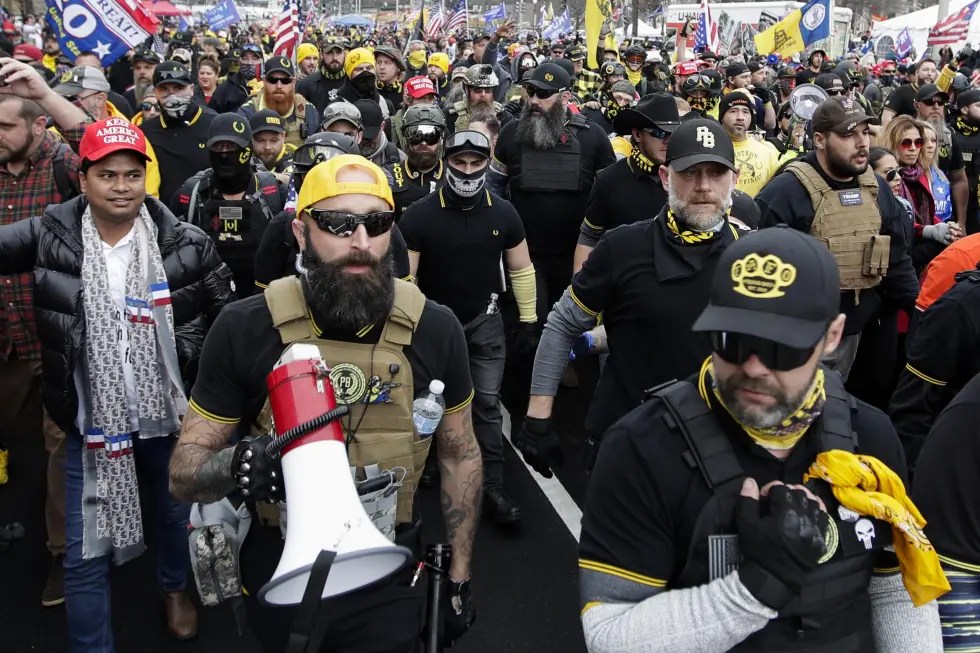
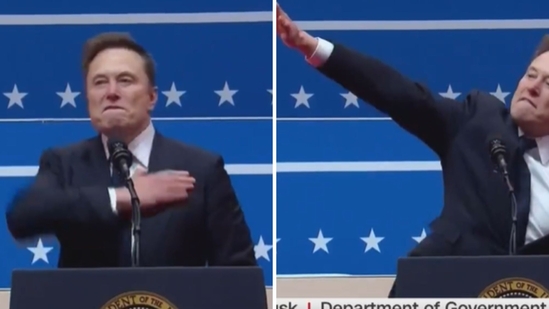
Even so, however, the number of fascists in the United States is obviously nowhere near zero. There are dozens of substantial organizations that are more or less openly fascist, including the Oath Keepers, the Proud Boys, the Patriot Front, the JDL, and the Three Percenters, to name only a few. Moreover, the “Yarvinite” version of fascism — which fuses “Alt-Right” culture-war agitation, neo-Nazi historical symbolism (like the notorious “Hitler-Musk Salute,” recently revived by the Tesla CEO but now widely practiced on the US Far Right), and extremist “market-fundamentalist” attacks on democracy and civic equality — has been openly embraced by leading Oligarchs in the US ruling class, including Elon Musk, Marc Andreesen, and Peter Thiel, among others. Yarvinite fascism may be mostly supported by a handful of criminal Oligarchs, but it does now play a key role in the Executive Branch of the US Federal Government, and has been championed by Vice-President Vance, who has been only too happy to see Musk assume a massively greater role in the Administration than his own. Its niche appeal to billionaires aside, there’s reason to think Yarvinite fascism has a non-trivial base of supporters in the general public, a fact probably due mainly to the web-based Musk personality cult, which overlaps extensively with the “Groyper” and “Incel” fascist subcultures.
It’s an unsettling, but undeniable fact that fascism is influential today in the broad public culture in a way that the Left has not been for generations. In part, the influence is indirect, as ideas originating from what we can call, for lack of a better term, the fascist intelligentsia, including Curtis Yarvin, Paul Gottfried, Christopher Rufo, and Michael Anton, have been allowed to spread via Far-Right influencers like Tucker Carlson, Joe Rogan, Jordan Peterson, and Candice Owens. But some leading fascists have a very direct, very large platform and command a substantial cultural ‘footprint,’ including neo-Nazi Kanye West (Ye), who is obviously one of the biggest celebrities in the world, and the Yarvinite oligarch Musk, who has used his ownership of Twitter as a vehicle for promoting fascism and white-supremacist street militancy in the US and around the world.
But suppose we want to quantify the spread of fascism’s influence, specifically in the USA? How might we proceed? You can’t just ask people, “Are you a fascist?,” or “Do you support fascism?,” because many fascists simply deny that they are fascists. Often, they claim — whether half-seriously, or simply in the mode of trolling their adversaries — that fascism is leftist, or that liberals are the real fascists, and so on. So, the effort to count fascists has to be more indirect.
I want to propose here an imperfect, but useful method for counting fascists. This week, the loosely Trump-aligned newspaper Washington Post, and the polling firm Ipsos, released a poll, and it showed — as expected — that the Oligarch-oriented, Far-Right policy priorities of the Musk and Trump Administration are rejected by most Americans. Of course, there are many tens of millions of Americans who support key elements of the agenda, even if the number of these supporters falls well short of half of the population. My question, however, is how we can tease apart two fragments of the core Trump-Musk base: the non-fascist fragment and the fascist fragment.
Luckily, the questions posed by the Post/Ipsos poll offer us a way to do exactly that. Two questions have a particular relevance to drawing the line between non-fascist and fascist parts of the nationalist and right-wing supporters of the Trump/Musk agenda. One question asks, in effect, whether Americans are willing to excuse or treat as legitimate the use of extra-constitutional political violence in the pursuit of right-wing nationalist political aims. It reads, “Do you support pardoning people convicted of violent crimes related to the January 6, 2021 Capitol riot?” (Emphasis on the word violent is in the original question, which contrasts with another question about pardoning non-violent offenders.) A second question that I want to highlight here asks, in effect, whether Americans are willing to support the exercise of unconstitutional, illegal actions by the Administration in pursuit of right-wing nationalist aims. It reads, “If a federal court rules that something the Trump administration did is illegal, should the Trump Administration follow the court ruling, or ignore the court ruling?”
The reason I see these two questions as the crucial ones is that a non-fascist — even one who is a nationalist and an anti-immigrant racist, who is (like Musk) “against the idea of unions,” and who thinks (also like Musk) that “racism against white people” is the only real racism — will quickly answer both questions with a “No.” Their reactionary conservative nationalism will stop decisively short of outright fascism. No, the non-fascist right-wing nationalist will say, the Administration should not ignore or defy court rulings, and no, it should not treat as legitimate the use of extra-constitutional political violence by nationalist militants. By the same token, however, a fascist will answer both questions with a “Yes.” Yes, the fascist will say, both the use of presidential decrees in defiance of the legal system or the constitutional order, and the use of extra-constitutional political street-violence by right-wing nationalist militants, are legitimate options for the political Right.
My proposal, then, is to count as “fascist” exactly that group of Americans who answer both questions in the way a fascist would answer them. To be sure, this is an imperfect way of identifying fascists. There may be some false negatives, missed by my method, and some false positives, whose support for these views is based on something other than fascism. But if we compare my proposal to the way political analysts, including some political scientists, frequently try to count the “working class” by counting “non-college educated adults,” then I think my way of counting fascists is considerably more defensible.
How many fascists are there in the USA, by this standard?
The number of Americans who support the issuing of pardons for the specifically violent January 6 rioters, and who thus implicitly (I take it) regard political violence by right-wing nationalist militants as legitimate, is 14%, according to the Ipsos poll.
The number of Americans who support the Trump Administration ignoring court rulings that identify its policies as illegal, and who thus implicitly reject the supremacy of the constitution, the rule of law, and the separation of powers, on a right-wing nationalist basis, is 11%.
Now, if my standard for counting fascists (as all and only those giving the fascism-linked answer to both questions) is a valid basis for arriving at an estimate, this would put the upper limit on fascists in the USA at 11% of the population. As it turns out, 11% of adults in the United States comes to about 28.8 million. Ideally, we would be able to “cross-tabulate” the answers, to see how many people gave the fascism-aligned answer to both questions, but I do not have access to that data. An estimate is required, and it is probably prudent to offer a relatively cautious one (more likely to undercount than to overcount fascists). If we assume, as seems reasonable to me, that at least ⅔ of the adults who gave the fascism-associated answer to the second question (about ignoring the courts) also gave the fascism-associated answer to the first question (about the legitimacy of political violence), then the number of fascist adults in the USA right now would be somewhere between 19 million at the low end and 28.8 million at the high end.
This estimate, which I regard as plausible, should be cause for alarm. Defeating fascism is possible. It has been done before, repeatedly. But it is never easy, and it is particularly difficult when fascism has many millions of supporters. An effective antifascist movement will have to build up a capacity and a willingness to fight the fascist movement at every opportunity, to confront it physically and politically, and to agitate and organize for a Left alternative form of anti-Establishment politics. The hegemony of the Democratic Party over a large section of those willing to actively oppose fascism will constantly pose problems, as the party’s apparatus and “leaders” can be expected to argue for the most narrowly legalistic and electoralist approach imaginable. They will demonize leftist militancy, and try to steer antifascists away from confrontation and a firm determination to fight. This is in part because they fear a resurgence of the Far Left more than they fear fascism, and in part because they earnestly believe that (predictably ineffectual) attempts to court a reputation for “respectability” and to seek the support of non-fascist conservatives is a winning strategy. As antifascists, we have to win the argument against these voices, and cultivate the emergence of a militant mass antifascist movement, rooted in labour and social-movement organizations, determined to defeat the Far Right and drive it back where it belongs, in the dustbin of history.
[Stephen D’Arcy is author of Frege and Fascism (Routledge, 2025) and Languages of the Unheard: Why Militant Protest is Good for Democracy (2013).]
 The Public Autonomy Project