How Many Americans are Fascists?

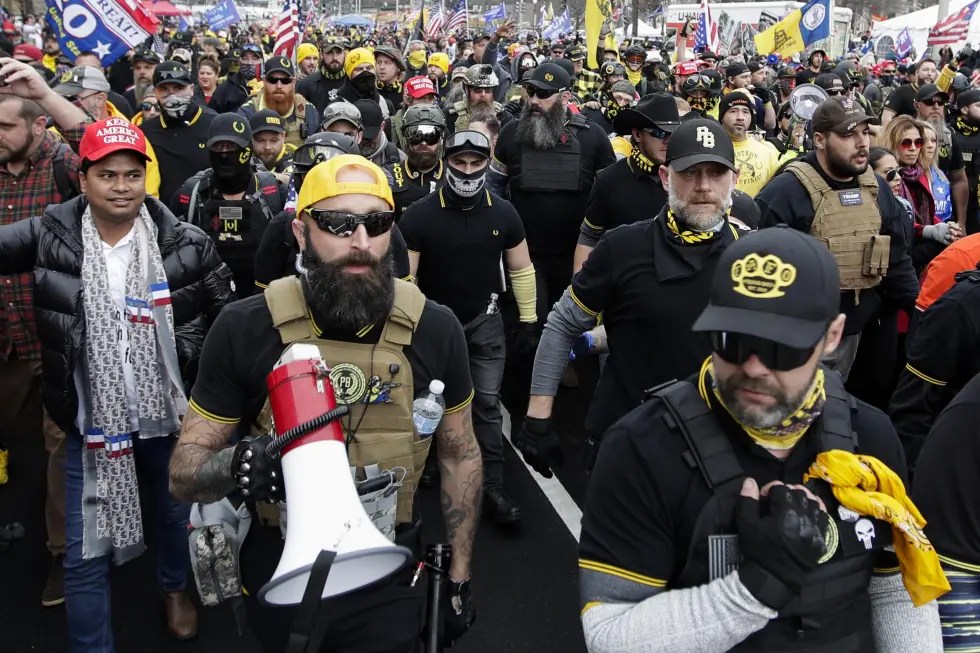
Fascists marching in Charlottesville, in 2017.

It is not easy to determine how many fascists there are in the United States. I think it’s fully clear that, by a considerable majority, Americans largely reject fascism, in part because they support the rule of law, multiparty electoral systems, and the basic rights and liberties ostensibly protected by the US Constitution, like freedom of association and freedom of assembly. It is possible, and actually quite common (as we see from Trump’s 2024 electoral victory), for people to be conservative nationalists, holding various racist, sexist, homophobic, transphobic, and anti-union views, while nevertheless also being non-fascist. The number of fascists will surely be well below the number of 2024 Trump voters, which is just over 77 million.

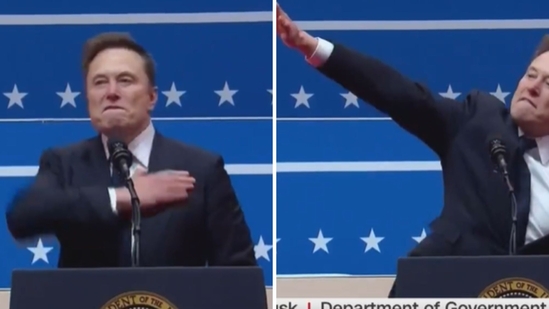
Even so, however, the number of fascists in the United States is obviously nowhere near zero. There are dozens of substantial organizations that are more or less openly fascist, including the Oath Keepers, the Proud Boys, the Patriot Front, the JDL, and the Three Percenters, to name only a few. Moreover, the “Yarvinite” version of fascism — which fuses “Alt-Right” culture-war agitation, neo-Nazi historical symbolism (like the notorious “Hitler-Musk Salute,” recently revived by the Tesla CEO but now widely practiced on the US Far Right), and extremist “market-fundamentalist” attacks on democracy and civic equality — has been openly embraced by leading Oligarchs in the US ruling class, including Elon Musk, Marc Andreesen, and Peter Thiel, among others. Yarvinite fascism may be mostly supported by a handful of criminal Oligarchs, but it does now play a key role in the Executive Branch of the US Federal Government, and has been championed by Vice-President Vance, who has been only too happy to see Musk assume a massively greater role in the Administration than his own. Its niche appeal to billionaires aside, there’s reason to think Yarvinite fascism has a non-trivial base of supporters in the general public, a fact probably due mainly to the web-based Musk personality cult, which overlaps extensively with the “Groyper” and “Incel” fascist subcultures.

It’s an unsettling, but undeniable fact that fascism is influential today in the broad public culture in a way that the Left has not been for generations. In part, the influence is indirect, as ideas originating from what we can call, for lack of a better term, the fascist intelligentsia, including Curtis Yarvin, Paul Gottfried, Christopher Rufo, and Michael Anton, have been allowed to spread via Far-Right influencers like Tucker Carlson, Joe Rogan, Jordan Peterson, and Candice Owens. But some leading fascists have a very direct, very large platform and command a substantial cultural ‘footprint,’ including neo-Nazi Kanye West (Ye), who is obviously one of the biggest celebrities in the world, and the Yarvinite oligarch Musk, who has used his ownership of Twitter as a vehicle for promoting fascism and white-supremacist street militancy in the US and around the world.

But suppose we want to quantify the spread of fascism’s influence, specifically in the USA? How might we proceed? You can’t just ask people, “Are you a fascist?,” or “Do you support fascism?,” because many fascists simply deny that they are fascists. Often, they claim — whether half-seriously, or simply in the mode of trolling their adversaries — that fascism is leftist, or that liberals are the real fascists, and so on. So, the effort to count fascists has to be more indirect. 

I want to propose here an imperfect, but useful method for counting fascists. This week, the loosely Trump-aligned newspaper Washington Post, and the polling firm Ipsos, released a poll, and it showed — as expected — that the Oligarch-oriented, Far-Right policy priorities of the Musk and Trump Administration are rejected by most Americans. Of course, there are many tens of millions of Americans who support key elements of the agenda, even if the number of these supporters falls well short of half of the population. My question, however, is how we can tease apart two fragments of the core Trump-Musk base: the non-fascist fragment and the fascist fragment.

Luckily, the questions posed by the Post/Ipsos poll offer us a way to do exactly that. Two questions have a particular relevance to drawing the line between non-fascist and fascist parts of the nationalist and right-wing supporters of the Trump/Musk agenda. One question asks, in effect, whether Americans are willing to excuse or treat as legitimate the use of extra-constitutional political violence in the pursuit of right-wing nationalist political aims. It reads, “Do you support pardoning people convicted of violent crimes related to the January 6, 2021 Capitol riot?” (Emphasis on the word violent is in the original question, which contrasts with another question about pardoning non-violent offenders.) A second question that I want to highlight here asks, in effect, whether Americans are willing to support the exercise of unconstitutional, illegal actions by the Administration in pursuit of right-wing nationalist aims. It reads, “If a federal court rules that something the Trump administration did is illegal, should the Trump Administration follow the court ruling, or ignore the court ruling?”

The reason I see these two questions as the crucial ones is that a non-fascist — even one who is a nationalist and an anti-immigrant racist, who is (like Musk) “against the idea of unions,” and who thinks (also like Musk) that “racism against white people” is the only real racism — will quickly answer both questions with a “No.” Their reactionary conservative nationalism will stop decisively short of outright fascism. No, the non-fascist right-wing nationalist will say, the Administration should not ignore or defy court rulings, and no, it should not treat as legitimate the use of extra-constitutional political violence by nationalist militants. By the same token, however, a fascist will answer both questions with a “Yes.” Yes, the fascist will say, both the use of presidential decrees in defiance of the legal system or the constitutional order, and the use of extra-constitutional political street-violence by right-wing nationalist militants, are legitimate options for the political Right. 

My proposal, then, is to count as “fascist” exactly that group of Americans who answer both questions in the way a fascist would answer them. To be sure, this is an imperfect way of identifying fascists. There may be some false negatives, missed by my method, and some false positives, whose support for these views is based on something other than fascism. But if we compare my proposal to the way political analysts, including some political scientists, frequently try to count the “working class” by counting “non-college educated adults,” then I think my way of counting fascists is considerably more defensible. 

How many fascists are there in the USA, by this standard?

The number of Americans who support the issuing of pardons for the specifically violent January 6 rioters, and who thus implicitly (I take it) regard political violence by right-wing nationalist militants as legitimate, is 14%, according to the Ipsos poll.

The number of Americans who support the Trump Administration ignoring court rulings that identify its policies as illegal, and who thus implicitly reject the supremacy of the constitution, the rule of law, and the separation of powers, on a right-wing nationalist basis, is 11%.

Now, if my standard for counting fascists (as all and only those giving the fascism-linked answer to both questions) is a valid basis for arriving at an estimate, this would put the upper limit on fascists in the USA at 11% of the population. As it turns out, 11% of adults in the United States comes to about  28.8 million. Ideally, we would be able to “cross-tabulate” the answers, to see how many people gave the fascism-aligned answer to both questions, but I do not have access to that data. An estimate is required, and it is probably prudent to offer a relatively cautious one (more likely to undercount than to overcount fascists). If we assume, as seems reasonable to me, that at least ⅔ of the adults who gave the fascism-associated answer to the second question (about ignoring the courts) also gave the fascism-associated answer to the first question (about the legitimacy of political violence), then the number of fascist adults in the USA right now would be somewhere between 19 million at the low end and 28.8 million at the high end

This estimate, which I regard as plausible, should be cause for alarm. Defeating fascism is possible. It has been done before, repeatedly. But it is never easy, and it is particularly difficult when fascism has many millions of supporters. An effective antifascist movement will have to build up a capacity and a willingness to fight the fascist movement at every opportunity, to confront it physically and politically, and to agitate and organize for a Left alternative form of anti-Establishment politics. The hegemony of the Democratic Party over a large section of those willing to actively oppose fascism will constantly pose problems, as the party’s apparatus and “leaders” can be expected to argue for the most narrowly legalistic and electoralist approach imaginable. They will demonize leftist militancy, and try to steer antifascists away from confrontation and a firm determination to fight. This is in part because they fear a resurgence of the Far Left more than they fear fascism, and in part because they earnestly believe that (predictably ineffectual) attempts to court a reputation for “respectability” and to seek the support of non-fascist conservatives is a winning strategy. As antifascists, we have to win the argument against these voices, and cultivate the emergence of a militant mass antifascist movement, rooted in labour and social-movement organizations, determined to defeat the Far Right and drive it back where it belongs, in the dustbin of history. 

[Stephen D’Arcy is author of Frege and Fascism (Routledge, 2025) and Languages of the Unheard: Why Militant Protest is Good for Democracy (2013).]
What Is and What Isn’t Fascist in the USA Right Now? An Antifascist Perspective

The USA is (Still) a Capitalist Constitutional Democracy

Almost (but not quite) all antifascists today would agree with the claim that there is not a “fascist regime” in the USA at this time (or for that matter in other countries where the Far Right is in power), as long as by “regime” we are referring to the type of legal and political order in place. The Third Reich was a fascist regime, as was Italy under Mussolini. The United States is currently a constitutional democracy. That’s why both legislation and presidential decrees (“executive orders”) are still subject to judicial review, and the leading public officials in the Executive and Legislative branches still rely on the multi-party electoral procedures of capitalist (“liberal”) democracy to validate most of the authority and power they wield. (Here we have to recall that the McCarthyism era of political repression in the US, the period of internment of Japanese Americans in 1942, the Biden-sponsored Genocide against Gaza, and many other periods of repression, corruption, and anti-democratic governance, all occurred in the context of constitutional capitalist democracy — so liberal-capitalist constitutionalism does not mean governance with due respect for democracy, equality or universal human rights.) Instances of unconstitutional overreach, such as by Musk and Trump, in the exercise of executive authority — which have indeed occurred frequently since the Second Trump administration took office less than a month ago — not only can be, but are in fact being contested in the courts, and for the time being the courts seem both willing and able to rein in such attempts to circumvent or override the constitutional order. 

At the level of grassroots political activity and social engagement, the degree of civic freedom — while unacceptably compromised, as usual — falls within the normal range for constitutionally constrained capitalist democracies when conservative or nationalist parties are in control of the executive branch of government. Generally speaking, dissenters are able not only to join opposition political parties, or publish opposition periodicals, TV programs or podcasts, but can even organize or join trade unions or migrant-workers’ rights organizations. The persistence of these options indicates that the basic constitutional constraints that are supposed (by liberals) to hold fascism at bay remain, for the most part, in place. This is so even if it is unusually common now, compared to any time since the end of the Second World War, to hear these features of constitutional capitalist democracy attacked by high-level pubic officials, including Musk and Trump, both of whom have been willing to speak out publicly against the rule of law the existence of unions, and the separation of powers.

Three Points of Controversy

These factual claims are, I think, relatively uncontroversial among antifascists, even if some people emphasize them more than others do.

But this seeming consensus conceals the persistence of real differences of opinion and analysis among antifascists, just below the surface. The points on which there is no agreement include: (1) whether the fascist movement today is a marginal force in the USA, with perhaps hundreds of thousands of supporters (all very active on twitter, apparently), or a powerful force supported by many millions of people; (2) whether some of the leading individuals in control of the Executive branch of the US government (like Trump and Musk at the top, and others at the cabinet or top-advisor level) should be interpreted as pursuing a broadly fascist agenda, or just a conservative nationalist one; and relatedly (3) whether the militias and street-fighting clubs like Oath Keepers, Patriot Front, and Proud Boys are part of the same social and political movement as Trump and Musk, or part of a different, much less powerful movement that remains quite distant from the main centres of political power in the USA.

Does Fascism Have a Mass Base of Support in the USA

On the first question, I follow the pessimistic view, that there are not only hundreds of thousands, but actually millions of fascists in the US, who would for example be eager to support the Trump-Musk administration if it tried to postpone the midterm elections for two (or more) years, or to declare an emergency to suspend judicial review for Executive branch decisions, or indeed to ban collective bargaining. Many antifascists regard this as a panicky and overwrought worry, on my part. They claim that, were any such measure attempted, it would quickly yield to a broad social consensus that it’s not acceptable and won’t stand. I think, on the contrary, that there’s reason to believe that, although not a majority by any means, there may well be a substantial minority, comprising several million people, who would eagerly sign up to support a fundamental rupture with the constitutional order in the USA, on an ultranationalist basis. My assessment is mainly based on the fact that, in every case where Trump and Musk have overreached in a fascist direction, they have been able to retain the support of at least 30% or more Americans. The idea that there are not millions that would be on board for a fundamental break with the constitutional order, up to and including suspending elections or banning collective bargaining, seems hard to to substantiate, based on the polling.

My view, in short, is that fascism does have a mass (but nothing like a majority) base of support in the USA, a month into the second Trump Administration.

Are Figures Like Musk and Trump Fascists, Pursuing a Fascist Agenda, or Just Conservative Nationalists?

On the second question, I do believe that many of the highest-level officials in the US executive branch right now are fascists. To be specific, I believe that many of them (including Musk and JD Vance, and to some extent also Trump, although he’s obviously less ideological) are white nationalists who are contemptuous of multi-party democracy, would prefer to weaken it as far as possible in an authoritarian way, replacing the ‘elected representative’ model with the CEO model of leadership authority, and that, in Musk’s words, they “disagree with the idea of unions” and other popular resistance movement organizations, and would like to see them neutralized or to see their main activities made effectively illegal, allowing a much more routine use of arrests, police violence, and (for non-citizens) deportation of protesters or dissidents than would normally be deemed consistent with liberal democracy, even with conservatives or nationalists in power.

Of course, just as you don’t get a “socialist society” by simply putting socialist people in positions of power, neither do you get a fascist regime by simply putting fascists in positions of power. 

You can have fascists in power without fascism (that is, without an ultranationalist rupture with the constitutional order of capitalist democracy). But for the most part I think people are right to think that a broadly fascist agenda — including an authoritarian-nationalist hostility to liberal democracy, scorn for the rule of law, and support for the legal and political delegitimization of collective bargaining and left-wing social protest — is motivating many of the moves of the US executive branch. These fascism-oriented moves by the new Trump Administration include (1) its attempt to nullify or effectively bypass public sector collective agreements; (2) its attempt to de-legitimize and demonize social movements like trans liberation, feminism and anti-racism, with constant talk and one executive order proposing deportation of protesters and social critics; (3) its attempt to render irrelevant the role of the legislative branch of government and to contest the role of the judicial branch (both of which are MAGA-led and generally supportive of these changes); (4) its attempt to use Leader cults as an alternative source of legitimacy, separate from the official political process; and (5) its attempt to decriminalize and legitimize openly fascist militias and street-fighting clubs.

If I’m right about this, then we should see Musk and Trump as pursuing a fascist agenda within the confines of a constitutional democracy, but continually struggling against those confining limits and agitating to weaken their public legitimacy and scheming to circumvent legal or constitutional restrictions that limit how much of their agenda can be carried out. 

This brings me to the third question: Are the street-level fascist militias and street-fighting clubs like Patriot Front, Proud Boys, and Oath Keepers part of the same movement as Trump and Musk? Or are they in fact part of a different, much more marginal “fringe” movement with relatively little influence and power? 

Are Street-Level Fascists Part of the Same Movement as Trump and Musk?

Here I want to avoid being misunderstood. I’m not asking whether the Trump-aligned Far-Right movement is ideologically homogeneous, from top to bottom, such that the politics of the Administration is identical to that of the Patriot Front. The Trump/Musk movement isn’t homogeneous at all: it includes libertarian-fascist “Yarvinists” like Thiel, Andreesen, and Musk, ultra-nationalist nativists like Steve Bannon and Stephen Miller, “anti-woke” fanatics like Matt Taibbi and Joe Rogan, and even unhinged neo-Strasserist fascists like Jackson Hinkle. More broadly, and shamefully, the movement even has “fellow travellers” holding high offices in the US labor movement, like Sean O’Brien (Teamsters) and Ed Kelly (IAFF), and wields real influence among “anti-woke” professors in academia, some of whom deny any affiliation with the Far Right.

I’m also not asking whether members of Far-Right street-fighting clubs and militias are themselves powerful, alongside Trump and Musk. Clearly, they are not. Then again, individual members of Mussolini’s “squadristi” and Hitler’s “brownshirts” were not personally powerful either. 

The question I’m asking, rather, is whether the street-level fascists and leading Trump-Administration officials are part of the same movement. If we think of Trump and Musk mainly or exclusively in the context of the Republican Party’s machinations in Washington, DC, then Trump and Musk seem less like fascists, at the head of a fascist mass movement, and more like generic white-nationalist politicians, like former Senator Jeff Sessions or former Rep. Steve King. 

Here again, I take a relatively pessimistic view (that is, a view that underlines the dangers of fascism today, not the barriers to its growth). In my view, fascism today is not “integral,” combining leader, party, militia, intelligentsia, and propaganda organs in a single command-and-control hierarchy; instead, it is “distributed,” or spread out in distinct organizations or projects. But the movement is nevertheless relatively unified in that these distinct projects are willing and able to engage in effective collaboration wherever this helps advance their shared agenda. So, the behind-the-scenes coordination of Far-Right militias with the Trump Administration before and during the January 6 putsch should be seen as an indication that, though independently operating, there is a singular movement of the US Far Right, led by Trump (and now Musk), which is able to see itself as a single movement, and to act accordingly. Despite its distributed, non-integral character, the US Far Right is arguably much more unitary and coordinated than any social movement that the US Left has had at its disposal in the first quarter of the 21st century. 

Trump may or may not be subjectively fascist, in the sense of personally identifying with the fascist tradition. (He has instead publicly associated himself with Bonapartism, which is related, but different in ways that I cannot now discuss.) But, like Musk, who has for his part done more to cultivate a fascist public persona, Trump is part of a militant US Far-Right movement which is in fact a (non-integral) fascist movement, pursuing a fascist agenda to shift the USA away from liberal democracy and democratic equality, to weaken or criminalize labour and social movement resistance activity, and to delegitimize (left-wing) dissent, protest, and social criticism.

Concluding Thoughts

Tying these strands together somewhat, and returning to my opening question, does the Musk and Trump-led government constitute a fascist regime? No, it does not, for the reasons I gave in my first two paragraphs. The US remains a constitutional capitalist democracy, and this constitutional order does not (now) seem on the brink of collapse. On the contrary, it seems fairly robust, even though it is being seriously pressured and strained. So, there’s no fascist regime. But fascist politics is fully back at the centre of US politics, and it is seemingly a very major force, with a mass base of support. The US government’s Executive branch, along with the Supreme Court and the US Congress, are dominated by an alliance of fascists and fascism-aligned conservatives. True, some of the latter group would probably prefer that the Far Right rule in a constitutional way, consistent with the constraints typical of capitalist-democratic constitutional orders. They would prefer that Trump and Musk rule in the way Reagan and Thatcher did: hostile to democracy and the left, of course, but compliant with the inherited constitutional order, more or less.

But this is exactly the problem at the root of fascism’s rise: the neoliberal “regime of accumulation” that Reagan and Thatcher promoted is no longer, since the 2008 financial crisis, able to secure the public support needed to win electoral majorities for the Right, or even the Centre. Now, political parties that promise the public more and more neoliberalism are at a tremendous disadvantage. Only a populist appeal to the public’s thirst for change and a challenge to elites can win broad public support. Trump won the election because he was willing to assume an anti-Establishment posture, albeit in the fakest way possible, while the Democrats would rather lose election after election than even pretend to turn against neoliberal economics. And that’s why antifascists know that the Democratic Party could never play a role in fighting the Far Right: Democrats always fear the Left, even the mildest social-democratic Left, more than they fear the Far Right. The Democrats worry, with some justification, that parts of the Left might mean it when they propose to contest the Establishment and target the billionaire class, whereas no one is safer than a billionaire in a government led by right-wing populists. And protecting the rich and powerful is the one core value shared by both Republicans and Democrats in the USA today.