
It would be a mistake, albeit an understandable one, to describe the US government as a fascist regime. But what about those who say, instead, that the US government is in the grip of a fascist movement? That is a different matter. For a regime to be fascist, it cannot really have competitive elections or an independent judiciary. Basic civil rights like freedom of assembly, speech, and association have to be largely or wholly denied to regime critics and dissidents. But for a movement to be fascist, it is only required that its project be fascist, that is, that it wants and in various ways tries to undermine or eliminate competitive elections and an independent judiciary, that it aspires to deny to the enemies of the far right the civil rights of assembly, speech, and association.
The ‘fascism debate’ in the USA is not about the character of the regime, which remains largely liberal-democratic. It is about the character of the MAGA movement that currently controls the Executive Branch, both houses of Congress, and the Supreme Court. Its powers are formidable, but it has not broken out of the constraints and obstacles established by liberal constitutionalism, autonomous working-class social movements, the semi-autonomy of the judiciary, or the persistence of a semi-viable political opposition. It wishes to break out of these constraints and barriers to its project, but it has not in fact done so.
Most antifascists would agree, at least upon reflection, that fascism is defined not by its achievements but by its strategic ambitions. Think of Hitler’s Nazi Party in early 1924, at the lowest ebb of its political power and social influence. Reeling from the embarrassing fiasco of its recently bungled Beer Hall Putsch, the party’s leadership languished in jail, awaiting trial for treason, it was banned from fielding candidates in the upcoming Reichstag election, and its militia was being forcibly disbanded. The fascism of Hitler’s Nazis at that time consisted almost entirely of what seemed, precisely to the most well-informed observers, to be baseless fantasies about what it might one day achieve. Even so, the Nazi Party — discredited, largely without influence, and literally a laughing-stock — was fully fascist. The point is not that it wished to be fascist; it absolutely was fascist.
In practical terms, the Nazi Party in 1924 had accomplished almost none of its aims, and it had no choice but to adapt to the humiliation and jailing of its leaders, the criminalization of its militia, the persistence of socialist and communist successes in the Reichstag, and the formidable powers enjoyed by Germany’s socialist president, all protected by a republican constitution and an independent judiciary that the Nazis despised but that still restricted the movement’s activities at every turn.
To be sure, when the Nazis in the mid-1920s complied with the constitution, the courts, and the legislature of the Weimar Republic, they did so only grudgingly. Whenever they were able to find a way of circumventing the restrictions of the legal order, they did so without hesitation. But more often than not they had to just accept that the entrenched legal order of the Republic, along with the balance of power in society, restricted them and limited the scope of their activities. An intractable chasm persisted between the ambitions the fascists had in principle (some of which were set out in 1925 in Mein Kampf) and the capacities they wielded in practice. The party’s anti-constitutionalism was in this respect exclusively “aspirational” at that time, because the movement simply lacked the power to challenge the courts, to break up trade unions and socialist parties, to close left-wing newspapers, and so on. If at one time it imagined it could pull off these measures by means of a bold insurrection, the reality of the movement’s relative weakness was revealed only too vividly by the comprehensive defeat in November 1923 of its disastrous attempted Putsch.
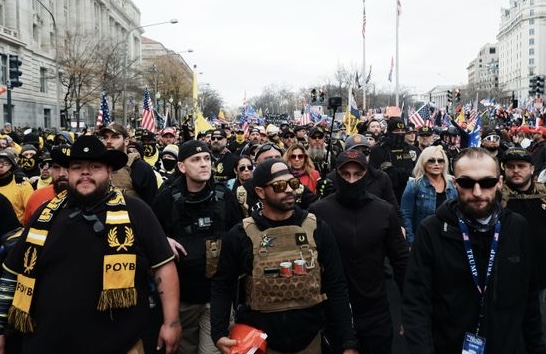
Today, not every antifascist appreciates the point that long before it triumphs — shattering the constraints of the liberal-democratic constitution and crushing the resistance capacities of working-class movements — fascism may already exist, as a movement animated by ambitions that it is quite unable to put into effect. This is relevant to the debates about whether or not the MAGA movement is fascist today, or only poses the danger that it could one day become fascist if allowed to metastasize. Some treat this question, wrongly, as a matter of whether or not the Trump Administration can get away with defying the courts, disbanding opposition parties, closing dissident newspapers, or whether the MAGA insurrection of 2021 was ever close to succeeding, and so on. But this simply isn’t what’s at issue in the ‘fascism debate’ surrounding MAGA. What we need to assess is what the MAGA movement would do if, counter-factually, the movement were to overcome the political obstacles and legal restrictions that stand in its way. The question, in other words, is whether or not the MAGA movement would relish the chance to carry out actions of the manifestly fascist type, were it able to muster the kind of social power that would be required to mount a serious challenge to democratic politics and launch a forceful attack against egalitarian norms, policies, laws, and legal precedents. They do not have this capacity, not fully anyway, but that doesn’t mean that they wouldn’t love to have it, nor that they do not already actively seek it.
Once one understands the question that is at stake in the fascism debate, it becomes easier to arrive at a blunt assessment: Yes, the MAGA movement is fascist, in the relevant sense, because its ambitions are typically fascist.
Really, the MAGA movement does nothing to hide its project, its zeal to launch a comprehensive attack on the democratic rights, organizational capacities, and historic achievements of the labour and social movements of the working class. (Those who read the writings of MAGA intellectuals like Michael Anton, Russell Vought, Angelo Codevilla, Kevin Slack, Casey Wheatland, etc., will be particularly clear about this.) The leaders, intellectuals, and support-base loyalists of MAGA all express regularly, by words and deeds, that they want the movement to free itself from the limits that still constrain it, including its ongoing exposure to political opposition in a multiparty electoral system, an independent judiciary, a free press, and the protest and organizing activities of viable, legally (semi-)protected working-class movements.
So, we have to attend not only to what the MAGA movement (or the Trump Administration) does, but also what it aspires or has the ambition to do. Four strategic ambitions, or aspirational benchmarks of strategic success, typify the political project of the fascist far right today, including the MAGA movement. Although there’s nothing special about the names, and we don’t even need to name them, we might call the far right’s strategic ambitions social revanchism, national populism, political gangsterism, and (borrowing the phrase used by MAGA intellectuals themselves) post-constitutional Caesarism. Taken together, as a coherent political project, they define the ambitions of today’s fascist far right:
- Social revanchism is the ambition to carry out a sustained attack on the organizational strongholds and sedimented social gains of working-class movements (like feminism, anti-racism, decolonization, trade unionism, environmentalism, LGBTQ+ liberation, and social democracy), in order to roll back decades of egalitarian and democratic reforms.
- National populism is the ambition to secure a mass base of popular support for social revanchism by co-opting popular anger about elites and the social inequalities that advantage them and redirecting that anger toward established democratic and egalitarian norms, policies, laws and institutions and those who benefit from or defend them.
- Political gangsterism is the ambition to secure factional dominance for the far right by deploying lawless terror (partisan political violence) and kleptocracy (extortion and influence-peddling) to strengthen the far right’s allies and weaken its enemies.1
- Post-constitutional Caesarism is the ambition to secure unchecked civic authority for the far right by replacing pluralistic democracy, as far as possible, with a post-constitutional strongman regime largely immune to potent challenges from social movements, opposition parties, or an independent judiciary.
To say (as I do) that the MAGA movement is fascist is to say, in short, that these are its animating ambitions, that it endeavors as far as possible to fight for its social-revanchist mission by means of three discernibly distinct strategic initiatives: national populism, political gangsterism, and post-constitutional Caesarism. If this claim is correct, we should expect that the MAGA movement will do everything in its power — even if at times there may be very little in its power — to advance these strategic initiatives. And this seems absolutely to be the case.
Note that revanchism is not enough. If the far right, or part of it, were socially revanchist but simply wanted to win elections, pass legislation, etc., that would by no means be fascist. Fascism entails the adoption of (1) national populism’s fake-populist anti-establishment posture in pursuit of a mass base, (2) political gangsterism’s attempt to extricate the far right from any legal constraints on the wielding of factional power through partisan political violence and kleptocracy, and (3) post-constitutional Caesarism’s imposition of a strongman regime unchecked by effective challenges to its civic authority.
When thinking about these strategic ambitions, it is important to see that they have a certain structure. The first of these ambitions, social revanchism, is the fascism-strategy’s guiding aim; the other three ambitions are its strategic objectives, securing for the social-revanchist project three different forms of social power: national populism is supposed to yield popular support; political gangsterism is supposed to yield factional dominance, and post-constitutional Caesarism is supposed to yield unchecked civic authority.
A question of the highest importance for antifascists is whether there is (as I believe, but won’t argue here) an inherent tension between, on the one hand, the things the far right has to do to build up and maintain a broad base of popular support, notably by working to maintain its pretence of anti-establishment populism, and on the other hand, the things it has to do to gain the power advantages made available by terror, kleptocracy, and post-democratic strongman politics. This is a topic for another occasion, but it at least bears mentioning here that the analysis of fascism’s ambitions both can and must inform the strategy of antifascist militancy.
Endnote:
1 The expression “gangsterism” was used in the 1930s and 40s by antifascists of different currents (e.g, Leon Trotsky, Franz Neumann, R. Palme Dutt, and George Dimitrov) to describe the use of lawless political violence, intimidation, and corruption by fascists to gain unique advantages that their more constitutionally constrained or norm-compliant enemies were unable to access.
[Steve D’Arcy is author of Languages of the Unheard: Why Militant Protest is Good for Democracy (BTL, 2013) and Frege and Fascism (Routledge, 2025). He is currently writing a second book fascism, A Common Front: The Emerging Antifascist Counter-Offensive.]


Good article…I also believe the US isn’t fascist, due to the fact that Trump can lose in court, but that MAGA IS fascist. Thanks for this.